


Preparing cold brew coffee: simply delicious
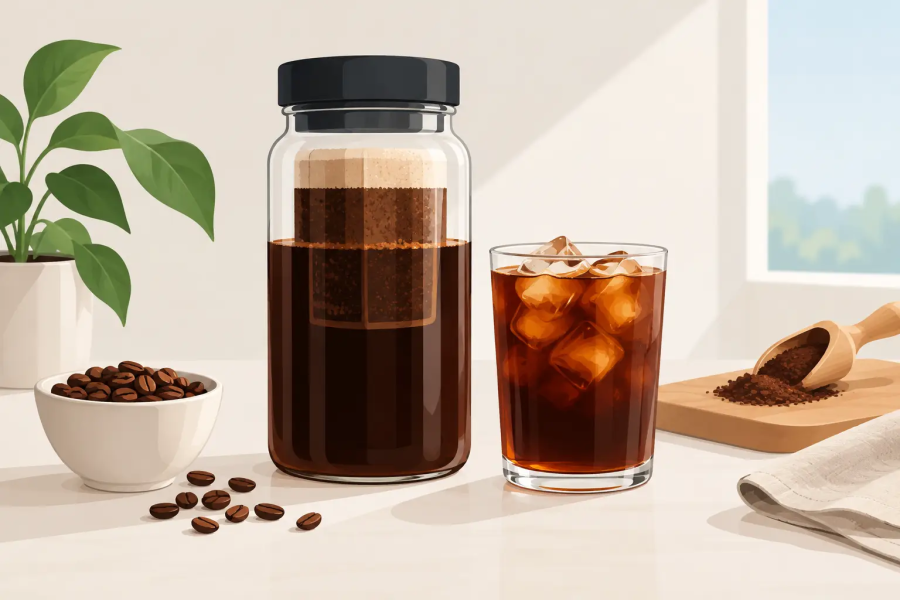
Preparing cold brew coffee: With fresh beans, a coarse grind and time, cold coffee turns out clear, sweet, aromatic and wonderfully refreshing at home.
When the afternoon warms up, coffee doesn't have to be heavy, bitter, or watered down with ice cubes. Making cold brew coffee means giving good coffee time. The cold water slowly and gently releases its aromas, resulting in a velvety drink with natural sweetness, clear notes, and remarkably low acidity.
Cold brew isn't just hastily cooled filter coffee. It's made by extracting the coffee at a cold or cool temperature over many hours. That's precisely what gives it its character: chocolatey, nutty, and caramel notes often come to the fore, while the sharp acidity that accompanies some hot brews remains significantly quieter. Hello! Can you already smell the aroma of freshly ground beans?
What distinguishes cold brew from iced coffee
Iced coffee is usually hot-brewed coffee that is then cooled and often served with milk, ice cream, or even vanilla ice cream. Cold brew, on the other hand, never comes into contact with hot water. This changes not only the temperature but also the flavor profile.
Hot brewing releases aromas and acids very quickly. Cold brewing, on the other hand, releases them slowly. The result is often smooth, well-rounded, and full-bodied. Those who appreciate coffee with dark chocolate, hazelnut, caramel, or ripe fruit will find cold brew a particularly relaxed setting for these nuances.
This doesn't mean that cold brew is inherently better. A bright, vibrant, and fruity highland coffee can seem more brilliant when brewed hot, because its floral and citrus notes are clearer. Therefore, balanced, sweet coffees are a particularly safe choice for cold brewing.
The right beans for cold brew coffee
The bean matters more than any fancy vessel. Use whole, preferably freshly roasted beans and grind them just before brewing. This way, the delicate oils and aromas stay where they belong: in your cup.
For a first attempt, medium to dark roasts are excellent. Coffees with notes of cocoa, dark chocolate, nougat, caramel, or roasted nuts are particularly harmonious when cold-brewed. A single-origin coffee from Brazil, Colombia, or Central America can also work wonderfully if it has mild acidity and a full body.
Very dark roasts aren't a must. They can produce a strong, classic cold brew, but depending on the bean, they can also bring smoky or very bitter notes. Lighter roasts offer more fruit and complexity, but require a bit more finesse. If in doubt, it's best to test small amounts. A sampler pack is ideal for this: the same brew with two different origin coffees suddenly tastes like a completely new drink.
The grind size: coarse is the better choice
Grind the beans coarsely, about the consistency of coarse sea salt. A grind that's too fine will quickly make the cold brew cloudy and can produce a dry, slightly bitter taste despite the cold extraction. It also makes filtering unnecessarily difficult.
If your coffee seems too weak after brewing, don't grind finer immediately. First, increase the amount of coffee or extend the contact time slightly. This will preserve the clean, smooth texture that cold brew is so popular for.
Making cold brew coffee - the basic recipe
To make approximately 700 to 800 milliliters of ready-to-drink cold brew, you will need 100 grams of coarsely ground coffee and 1 liter of cold, fresh water. Filtered water is recommended if your tap water is very hard (high in calcium). It allows the sweetness of the coffee beans to come through more clearly.
You don't need any special equipment. A large screw-top jar, a carafe, or a French press will suffice. For filtering, you can use a fine sieve with a paper filter, a cloth filter, or, in the case of a French press, first the plunger and then, if desired, a paper filter for greater clarity.
This is how the approach succeeds
Place the coffee in your container and slowly pour the water over it. Stir thoroughly once so that all the coffee grounds are coated. Seal the container and let the mixture steep in the refrigerator for 12 to 16 hours.
After about 12 hours, the flavor usually becomes soft and light. After 16 hours, it gains depth and body. Coffee should only be brewed for much longer than 18 hours if you are specifically seeking a very concentrated, intense character. Even with cold water, woody and dry notes can develop over time.
Next, filter the coffee slowly and without pressure. If the first pass is still slightly cloudy, filter it a second time through paper. Then, pour the cold brew into a clean bottle or carafe and return it to the refrigerator.
Concentrate or ready-to-drink?
The basic recipe yields a ready-to-drink cold brew. You can serve it directly over ice, open it with a splash of water, or enjoy it with milk. This option is convenient for many households because the measurements are always correct.
If you'd like to prepare a cold brew concentrate, choose a ratio of 1 part coffee to 5 parts water, for example, 100 grams of coffee to 500 milliliters of water. After filtering, dilute it with water, milk, or a plant-based milk alternative – depending on how strong you like your coffee.
A concentrate is practical for guests, for the office, or for hectic mornings. It takes up less space in the refrigerator and can be customized. The disadvantage: If you use too much, you can quickly mask the subtle flavor notes of a high-quality bean.
Small changes, big impact
Cold brew rewards curiosity. A few details noticeably change the character without complicating the basic recipe.
- For more sweetness: Choose a medium roast with caramel or chocolate notes and let the mixture steep for 14 to 16 hours.
- For more fruit: Use a lighter, carefully roasted Arabica and reduce the brewing time to about 12 hours.
- For greater clarity: After filtering through the sieve, filter again through paper. This removes fine particles and makes the taste more precise.
- For added creaminess: Serve the cold brew with cold milk, oat milk, or a small pinch of salt. The latter can soften any bitterness, but should really only be used sparingly.
Sugar is rarely necessary if the bean, roast, and ratio are right. If you still prefer sweetness, it's better to use simple syrup instead of granulated sugar – it dissolves instantly in cold drinks. A drop of vanilla or a little cinnamon can also be a nice touch, but should complement the coffee, not overpower it.
Common mistakes when making cold coffee
If your cold brew tastes bitter or dull, the grind was often too fine, the brewing time too long, or the beans were roasted too dark for this method. Next time, start with a coarser grind and filter more carefully.
If it's watery, the brew needs more coffee, not necessarily more time. Especially with a large carafe, the amount of coffee is often chosen too sparingly. Cold brew should smell and taste strong, because ice and milk can dilute it slightly later.
A sour, unbalanced impression can come from a very light, fruit-forward roast. This isn't a quality defect, but rather a matter of style. In that case, try a more balanced roast with more cocoa and nutty notes. Freshness also makes a difference: Beans roasted fresh daily and gently by hand bring out their origin much more clearly, especially in pure cold brew.
Storage and Serving
Well-filtered cold brew will keep for about five to seven days in a tightly sealed bottle in the refrigerator. However, it tastes best in the first three days, when the aroma and sweetness are most vibrant. Do not store it uncovered – coffee readily absorbs other refrigerator odors.
To serve, all you need are large ice cubes and a glass. If you want to experience the purest flavors, drink the first sip straight. Then decide whether a little water opens up the coffee or milk brings out its chocolatey notes. A well-made glass of cold brew isn't a replacement for your morning coffee, but rather a mini coffee break in its own right: cool, fragrant, and just right when you simply want to give good beans time to develop their full flavor.