


Choosing coffee beans by roast level made easy
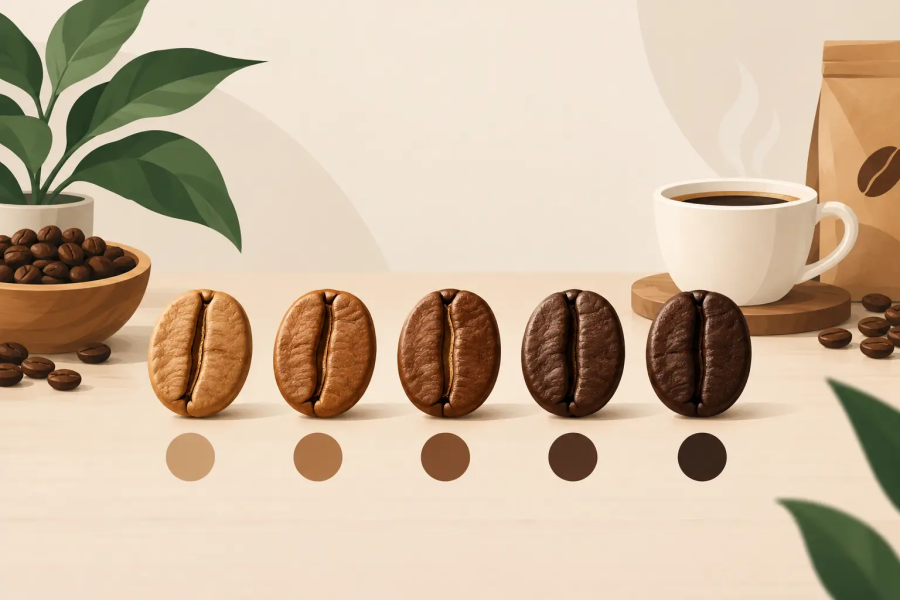
Select coffee beans according to roast level: Find out which light, medium and dark roast suits your taste and preparation method and enjoyment.
The aroma of freshly ground beans can smell of honey and cherries, or of dark chocolate, caramel, and roasted nuts. The crucial difference often lies not just in the country of origin, but in the roast level. Those who choose coffee beans based on roast level will more quickly find a coffee that suits their machine, their desired beverage, and, most importantly, their personal taste.
What the degree of roasting does to the taste
During roasting, green coffee beans are transformed by heat into the aromatic brown beans we know and love. Hundreds of aroma and flavor compounds are created in the process. The longer and more intense the roasting, the more pronounced these characteristic notes become. At the same time, the perceived acidity, sweetness, and body of the coffee change. Sugars caramelize, and fats transform into aromatic oils.
A light roast preserves many of the coffee's origins. For example, in an Ethiopian highland coffee, this might include nuances of citrus fruits, jasmine, or berries. A dark roast, on the other hand, brings more cocoa, roasted nuts, caramel, and a strong, full texture to the cup. Neither variant is inherently better; they simply reveal different facets of the same bean.
It's important to note that terms like "light," "medium," or "dark" aren't precisely defined everywhere. Bean color provides a starting point, but the roastery, coffee variety, and intended brewing method are equally important. A careful, gentle hand-roasting process in a drum roaster develops the aroma in a controlled manner, rather than masking it with the very high heat used in most industrial roasting methods.
Light roast: Taste the origin
Light roasts are the right choice for curious coffee lovers who want to discover the character of a coffee. They often come across as vibrant, clear, and complex. Depending on their origin, they can evoke notes of red fruits, cherries, grapes, citrus, tea, or blossoms. A subtle, natural sweetness can also be quite pronounced.
These coffees are particularly well-suited to filter brewing, whether in a pour-over, Chemex, or a good drip coffee maker. These methods allow the delicate aromas to fully develop. Those who prefer black coffee and appreciate the differences between growing regions are often well-advised to choose a light to medium roast.
The compromise: Light roasts require a bit more attention during brewing. If ground too coarsely or extracted for too short a time, the coffee can taste thin and harsh. Water that's too hot or contact time that's too long can make the acidity more pronounced. Acidity isn't necessarily a bad thing. In a high-quality coffee, it can be juicy and fruity, similar to a ripe apple. However, those specifically seeking low acidity should opt for medium or dark roasts.
Who are light beans suitable for?
They're perfect for filter coffee lovers, black coffee without milk, and anyone who enjoys fruity or floral flavor notes. They're possible in a classic cappuccino, but not always ideal: milk can dilute their subtle nuances. Ultimately, it comes down to personal taste.
Medium roast: Balance in the cup
For many coffee drinkers, a medium roast is the most pleasant starting point. It combines the bean's origin notes with more caramel sweetness, a rounder body, and a more restrained acidity. In the cup, you'll often find aromas of milk chocolate, hazelnut, caramel, honey, or dried fruit.
This balance makes medium roasts versatile. They work well as a café crème in fully automatic machines, as filter coffee, and often also in portafilter machines. Households with different preferences especially benefit from this: The coffee tastes clear and aromatic on its own, but remains present with milk.
When choosing coffee, it's worth looking beyond the roast level. A washed coffee from Kenya, even at a medium roast, can be more vibrant and fruity than a coffee from Brazil, which tends to have a nutty, chocolatey flavor. Those seeking a smooth, balanced cup should therefore pay attention to the combination of origin, description, and roast.
The all-rounder for fully automatic coffee machines and the breakfast table
Medium roasts truly shine in fully automatic coffee machines when freshly ground and intended to produce a harmonious crema. For a long morning coffee, the aroma should be pleasant but not overpowering. A medium roast offers precisely this uncomplicated elegance – provided the beans are fresh and the machine is properly calibrated.
Dark roast: Strong, creamy, espresso-friendly
Dark roasts are known for their intensity and rich mouthfeel. The acidity usually recedes into the background, while notes of chocolate, cocoa, roasted almonds, malt, or caramel become more pronounced. In a well-developed dark roast, this intensity doesn't taste burnt, but rather dense, sweet, and long-lasting.
It's the classic choice for espresso, portafilter machines, stovetop espresso makers, and many fully automatic coffee machines. It holds its own particularly well under a layer of milk. For cappuccino, latte macchiato, or flat white, it needs sufficient body and roasted aroma so that the coffee and milk form a harmonious whole.
Dark doesn't automatically mean bitter. Bitterness arises when beans are roasted too much, when the espresso is over-extracted, or when the grind and water quantity aren't right. A high-quality espresso roast can be strong yet still taste balanced. Those sensitive to acidity often find this style to be the most suitable.
Select coffee beans according to roast level: First the preparation, then the nuance
The simplest guide starts with your daily routine. For pour-over coffee and drip coffee makers, light to medium roasts are usually particularly well-suited, provided the acidity isn't bothersome. For café crème from a fully automatic machine, medium roasts are a reliable choice, while darker blends deliver a more robust result. For portafilter machines, stovetop espresso makers, and milk-based drinks, dark espresso roasts often produce the desired chocolatey-creamy profile.
This classification is a helpful starting point, not a rigid rule. A light roast espresso can be exciting and fruity if that's what you specifically like. Conversely, a medium roast coffee brewed with a pour-over filter can taste wonderfully well-rounded. The crucial factor is whether you're looking for fruit and clarity or chocolate, nuttiness, and richness.
Before buying , ask yourself : Do I primarily drink black or with milk? Do I prefer a vibrant freshness or do I want as little acidity as possible? Do I brew a single cup using a pour-over method or do I want the beans to work perfectly every morning in my automatic coffee machine? These answers are more informative than searching for the supposedly best roast.
Freshness is key
Even the perfect roast can lose its potential if beans are stored for a long time. Coffee isn't at its peak immediately after roasting: In the first few days, carbon dioxide escapes, which is crucial for a stable extraction in espresso. After that, a window of time begins in which the aromas develop particularly well.
Therefore, buy only what you need, rather than stockpiling for months. Store beans in an airtight container in a cool, dark place. Always grind them just before brewing. The difference in taste between whole and pre-ground beans is often worlds apart.
At Vee's Coffee, Grand Cru beans are freshly and gently roasted by hand daily and packaged while still warm. This is no small detail: Subtle origin notes, caramel sweetness, and a rich crema all benefit from the beans being ground at their peak freshness.
Create your own favorite profile with small amounts
The surest way to find the perfect roast isn't a theoretical test, but a comparison in your own kitchen. Try a light filter roast, a balanced medium roast, and a darker espresso roast, one after the other. Don't change everything at once. Use the same machine, ideally the same amount of water, and a suitable grind.
Don't just note "tastes good" or "doesn't taste good." Was the coffee fruity, nutty, creamy, dry, smooth, or very strong? Did it impress on its own but lose some of its character with milk? Such observations will lead you to your favorite bean faster than any general recommendation.
Let your taste have the final say. A coffee bean shouldn't just look good on the label; it should awaken anticipation with the first aroma from the grinder in the morning. That's precisely where good coffee begins: with a roast that suits you and your daily routine.