


Espresso roast put to the test for refined enjoyment
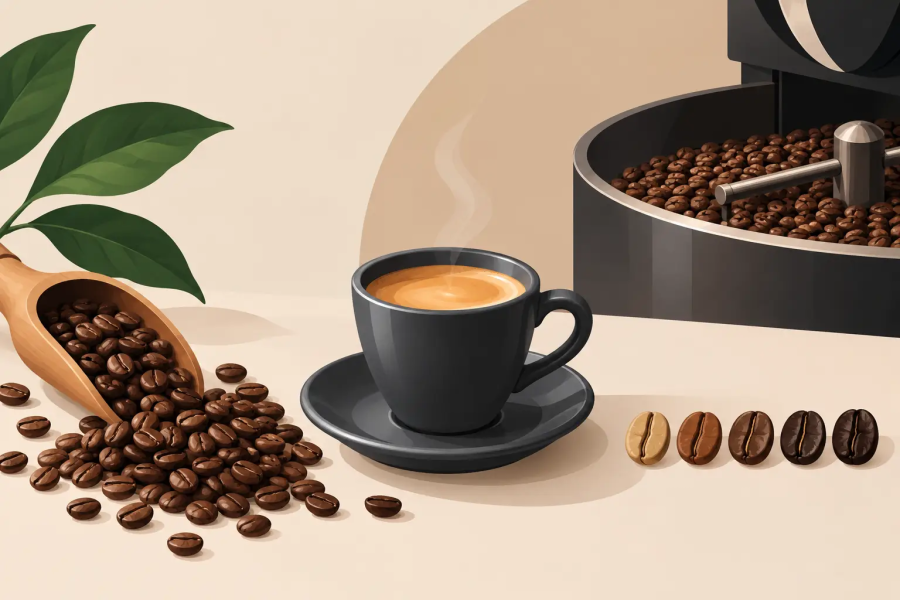
Espresso roast test: How to recognize fresh beans, balanced aromas and the right roast for portafilter machines, fully automatic machines and moka pots at home.
A good espresso should smell of dark chocolate, caramel, and roasted nuts—but never taste burnt, flat, or unpleasantly bitter. This is precisely what an espresso roast test demonstrates: it's not the darkest bean that wins, but the one whose roast profile, freshness, and origin harmonize perfectly in your cup. Hello! Do you also smell that aroma as soon as the grinder starts working? Then the enjoyment begins long before the first sip.
What an espresso roast test really checks
Many consider the color of the bean as the sole criterion. This is too simplistic. An espresso roast isn't achieved through a general range of light to dark degrees, but rather through the interplay of green coffee, roasting time, temperature control, and the desired flavor profile. An Ethiopian highland coffee with floral notes (small beans) requires a different approach than a Brazilian coffee with nutty, chocolatey undertones.
In an espresso roast test, three questions are paramount: How balanced does the coffee taste? How does it behave during extraction? And does it still taste good after cooling, since tasting takes place at room temperature? A successful roast combines natural sweetness, pleasant roasted aromas, and a substantial texture. It should give the coffee character, not mask its origin.
For everyday use, it's also crucial to consider the brewing method you're testing with. Subtle differences are particularly noticeable in a portafilter machine. In contrast, a fully automatic machine often requires a roast that remains well-rounded and low in acidity even with less precise dosing . A moka pot, on the other hand, demands an espresso that's strong enough without becoming bitter.
Light, medium or dark espresso roast?
A light roast can taste surprisingly vibrant. Depending on its origin, it can evoke notes of cherry, ripe berries, honey, or citrus. This is appealing in espresso, but demanding: temperature, grind size, and brewing time must be just right. Those expecting a very classic, low-acid espresso might find this style too fruity.
Medium-roasted espressos are the most pleasant introduction for many coffee lovers. They combine notes of origin with sweetness and body. Think nougat, milk chocolate, caramel, or almond. Such roasts often work just as convincingly on their own as in cappuccinos and flat whites, because the milk doesn't mask the delicate aromas.
A darker roast brings more roasted aromas, a fuller flavor, and usually less noticeable acidity. Cocoa, dark chocolate, roasted hazelnut, and spicy notes take center stage. This is ideal for people who like their espresso strong and classic. However, coffee that is roasted too dark can become dry, ashy, or harshly bitter. Therefore, a dark roast is not an indicator of quality, but rather a style choice.
Espresso roast test: How to proceed at home
A fair test doesn't require laboratory equipment. It only needs fresh beans, clean water, and the willingness to change just one variable at a time. Grind the beans immediately before brewing. Use the same dose and, if possible, the same amount of beverage for each sample. This way, you're comparing the coffee itself, not random differences in preparation.
Start with a ratio of approximately 1:2. For example, 18 grams of ground coffee will yield roughly 36 grams of espresso in about 25 to 30 seconds (double espresso). This isn't a hard and fast rule, but it's a good starting point. If the extraction is too fast and the coffee tastes weak or harsh, grind finer. If it drips too slowly and tastes harsh or dry, choose a slightly coarser grind.
Don't just drink your espresso piping hot. The crema is immediately noticeable after brewing, but it doesn't tell the whole story. After a minute, the sweetness becomes clearer. As it cools further, the fruit, chocolate, spice, and any potential off-notes reveal themselves particularly honestly. An espresso that tastes pleasantly warm and still well-balanced when lukewarm has done many things right in our test.
Write down your impressions in simple terms. If "chocolatey, smooth, low acidity, long aftertaste" is sufficient, that's already more valuable than complicated tasting notes. After two or three samples, you'll quickly realize whether you prefer creamy classics or lively, fruit-forward espressos.
Properly classifying crema
A hazelnut-colored, finely textured crema looks beautiful. It can indicate freshness, a proper grind, and successful extraction. However, it's not the sole proof of quality. Robusta beans, in particular, often produce a rich and stable crema, while a pure Arabica can be more subtle yet still taste exceptional.
Therefore, pay attention to the overall impression: Does the espresso have a clear aroma? Does it feel creamy on the palate? Does it retain a pleasant sweetness? Then more than just the appearance is right. Large, quickly dissipating bubbles or a very light crema can indicate that the grind, bean freshness, or temperature are not yet optimally balanced.
At Vee's, we only blend in 5% Robusta for a stable crema. Above 10%, the Robusta aromas become more dominant and rather unpleasant.
Freshness is not a secondary matter.
Coffee beans need some time after roasting to release gases. For espresso, they often develop a particularly harmonious flavor after a few days. After that, the longer they are exposed to air, the more aroma they lose. It's best to buy quantities that you can enjoy within a few weeks and store the beans in a dry, dark place in an airtight container.
The roasting date is more meaningful than a distant best-before date. Beans roasted fresh daily and gently by hand bring a different aromatic richness to the grinder than coffee that has been sitting on a shelf for a long time. At Vee's Coffee, the beans are packaged while still warm – a detail that is particularly noticeable in the vibrant aroma.
Typical errors that can distort a test result
The most common mistake is inconsistent grind size. Even small changes can determine whether an espresso tastes sweet and rich or sour and watery. An underheated espresso machine can also make a good roast taste weak. Give the machine, portafilter, and cup enough time to warm up.
Water is equally important. Very hard water can mask flavors and put a strain on the machine. Extremely soft water, on the other hand, can make the espresso taste weak. If your coffee tastes significantly different at home than it did during the first tasting, it's worth taking a look at the water, temperature, and cleaning before you jump to conclusions about the beans.
Also, don't try five espressos in a row. After two or three strong samples, your palate will tire. It's better to drink water, take a short break, and taste again later. If you love milk-based drinks, you should also try your favorites as cappuccinos. A purely fruity espresso can seem muted in milk, while a chocolatey-nutty blend really comes into its own.
Which espresso roast suits you best?
If you drink espresso straight and are looking for subtle nuances, intensely dark roasts from select highland coffees are an exciting choice. They reveal their origin and an elegant sweetness. For cappuccino, latte macchiato, and your morning automatic coffee machine, darker roasts with more body are often more reliable: plenty of substance, less acidity, and aromas that hold their own alongside milk.
Those sensitive to acidity shouldn't just look for "dark" coffee. Origin, processing, and roasting are also crucial. Coffees from Brazil, India, or Indonesia often have a particularly nutty, spicy, and smooth character . A carefully roasted coffee from Latin America can be just as low in acidity and taste significantly more refined than a very dark-roasted, generic blend.
Sample packs are a great solution if you're not yet sure of your preferred style . Choose two to four roasts, brew them with the same settings, and compare them at your own pace. This way, you avoid making a judgment based on a single, unsuccessful cup, and instead develop a taste compass for your everyday coffee.
The best espresso roast doesn't need to deliver a spectacular tasting note. It should reliably bring you joy in the morning, fill the room with a pleasant aroma, and invite you to take your next mindful sip.