


Light or dark roast – which one suits you best?
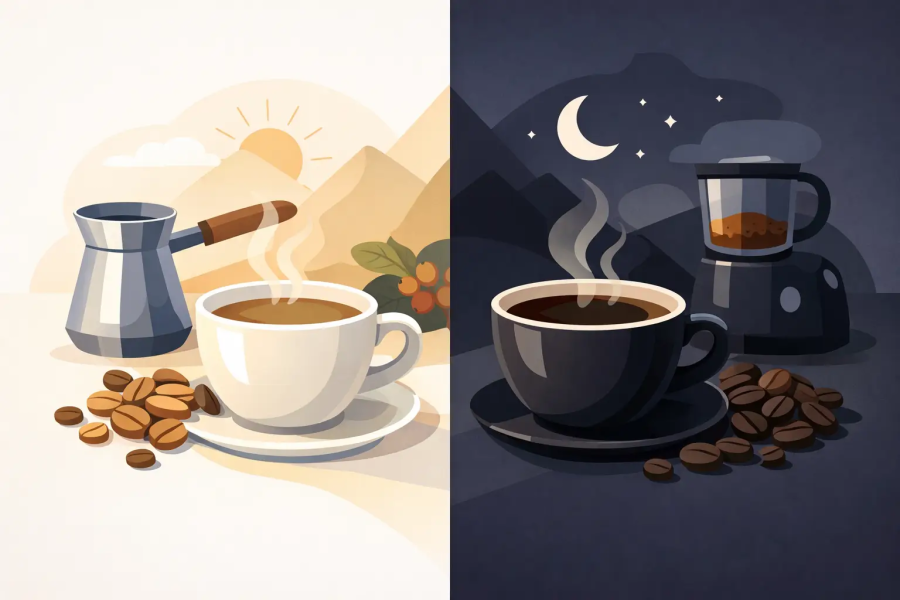
Light or dark roast? Discover how the roast level, bean variety and brewing method influence the flavour, acidity and body – and find your favourite coffee today.
The first aroma from the freshly opened package reveals a lot: fruity and light, nutty and caramel-like, or rich with dark chocolate. The question of light versus dark roast isn't about which is inherently better. It's about the flavors you're looking for in your cup, how you prepare your coffee, and whether you enjoy it black, with milk, or as an espresso.
The roast level is one of the most important factors influencing flavor. It largely determines whether the origin of a bean is clearly evident or whether the roasting process develops full-bodied, sweet, and spicy notes. Hello! Can you smell that aroma too? Then it's worth taking a closer look at what happens between a green coffee bean and your favorite cup of coffee.
What the roast level does to coffee
Coffee beans are greenish, hard, and almost odorless before roasting. It is only through the heat that the many aromas we love about coffee develop. Sugars and amino acids react with each other, the bean increases in volume, and fruity, floral, or nutty notes create a complex flavor profile.
With a light roast, this process ends earlier. The characteristics of origin, variety, and processing remain clearly perceptible, but at the expense of a more pronounced acidity. Even a dark roast of Ethiopian beans can evoke citrus fruits, cherries, or jasmine, while a highland coffee from Central America might suggest honey, stone fruits, or delicate nuts. That's why at Vee's, we roast gently and darkly to fully develop the characteristic aromas. And that's why we receive the best reviews from our customers.
A dark roast spends a longer time in the roasting drum at a lower temperature. This further reduces the original acids, resulting in stronger notes of cocoa, dark chocolate, roasted nuts, caramel, or spices. This doesn't mean that dark coffee is automatically bitter. Bitterness is usually a sign that the bean, roast, and preparation aren't working well together—or that the extraction was too hot and for too long.
Careful preparation is key. Grand Cru beans, roasted gently by hand, develop their profile evenly. This ensures that a light roast remains clear and vibrant, while a dark roast can reveal depth and sweetness without tasting harsh or burnt.
Light or dark roast: Taste decides.
Lighter roasts often have a more pronounced acidity. Their acidity is reminiscent of juicy but unripe fruit. They often have a light to medium body, and their aromas are complex. Those who drink black coffee and enjoy discovering differences between countries and harvests will find a great deal to explore here, provided they don't find the acidity off-putting.
Dark roasts, on the other hand, are usually stronger, rounder, and fuller-bodied. Their acidity is significantly more restrained, and their texture is often denser. This makes them a wonderful match for an espresso with a hazelnut-colored crema, a cappuccino, or a coffee enjoyed with milk in the morning. The roasted aromas blend harmoniously with the milk, bringing out notes of caramel, nougat, or dark chocolate.
But this classification isn't a template for taste. A light roast can be surprisingly sweet and creamy. A dark roast can taste elegant, clean, and balanced. The bean itself also plays a major role: Arabica from high altitudes has different characteristics than coffee from lower-lying growing regions or a carefully composed espresso blend.
Not all acids are the same.
Many coffee drinkers say, "I don't like acidic coffee." Often, they mean a sharp, unbalanced sensation in the mouth or an unpleasant feeling in the stomach. However, a high-quality light roast doesn't have to taste harsh. Its acidity can be reminiscent of red apples, tangerines, or ripe berries and is balanced by natural sweetness.
Those who prefer a very low-acid coffee will often find a medium-dark to dark roast to be the right choice. Coffees with chocolatey, nutty, and caramel notes are particularly harmonious. Gentle, daily roasting also contributes to a well-rounded coffee that retains its subtle nuances.
Which roast level is best suited to your preparation?
The best coffee beans only reach their full potential when prepared correctly. Therefore, it's worthwhile to consider the roast level and brewing method together.
For filter coffee, pour-over, or Chemex, light to medium roasts are often an excellent choice. These methods produce a relatively clean flavor profile and bring out delicate fruit, floral, and honey notes. Grind fresh and not too finely, use water just below boiling point, and allow the coffee sufficient time to bloom. This results in a clean, fragrant cup with plenty of character.
Medium roasts can also taste excellent from a fully automatic coffee machine. Here, the beans can have a bit more body so they don't taste too light. Those who drink their coffee black can start with a medium roast: it combines the origin notes of a light roast with the rounded sweetness of a darker one.
Medium-dark and dark roasts are usually particularly suitable for portafilter machines, stovetop espresso makers, and fully automatic machines that prepare milk-based drinks. The short, concentrated extraction of an espresso demands a bean that offers structure and sweetness. A good espresso tastes intense but not aggressive—full-bodied on the tongue, with notes of cocoa, caramel, or roasted almonds.
With French press and Karlsbad coffee makers, the choice depends more on personal taste. The French press emphasizes oils and body, which is why a darker roast can be very velvety. A medium roast brings more nuance and freshness. Tasting is highly recommended.
Caffeine: Lighter beans are not automatically stronger
A common misconception persists: that dark-roasted coffee has significantly less caffeine. In fact, the roasting process only slightly alters the caffeine content per bean. Because dark beans become lighter and larger during roasting, there can be slight differences depending on the dosage. However, in the cup, the coffee variety, the amount, and the brewing method are usually much more crucial.
If you want to consciously reduce your caffeine consumption, a high-quality decaffeinated coffee is a more reliable choice than changing the roast level. Decaffeinated beans can also taste fresh, aromatic, and delicious – whether nutty and mild or rich and chocolatey.
How to find your personal roast level
Don't start by asking if you're a connoisseur. Start with the taste you truly look forward to in the morning. Do you prefer bright, rich aromas and drink your coffee mostly black? Then try a single-origin, light to medium roast highland coffee. Are you looking for a smooth, full-bodied companion for cappuccinos and lattes? Then a darker espresso roast is often the more enjoyable choice.
The most revealing way to test your coffee is with a small comparison at home. Prepare two different roast levels using the same method, if possible, and pay attention to the aroma, sweetness, acidity, body, and aftertaste. Does the coffee suddenly taste even better after cooling, or does it become too bitter? This observation alone will reveal a lot about your preferences.
A sampler pack takes the pressure off the decision. Instead of committing to a single variety, you get to know different countries of origin and roasting profiles cup by cup. At Vee's Coffee, the beans are freshly and gently roasted by hand daily, ensuring minimal time between roasting and enjoyment. This freshness makes the differences in aroma particularly noticeable.
Your favorite roast is perfectly acceptable to change. In summer, a crisp filter coffee with notes of cherry and honey might be just the thing, while in winter, a rich espresso with dark chocolate and caramel would be ideal. Good coffee isn't a test with a single right answer. It's an invitation to consciously savor the moment—and to be curious about the aroma the next time you open the package.