


Adjusting the espresso crema correctly for greater enjoyment
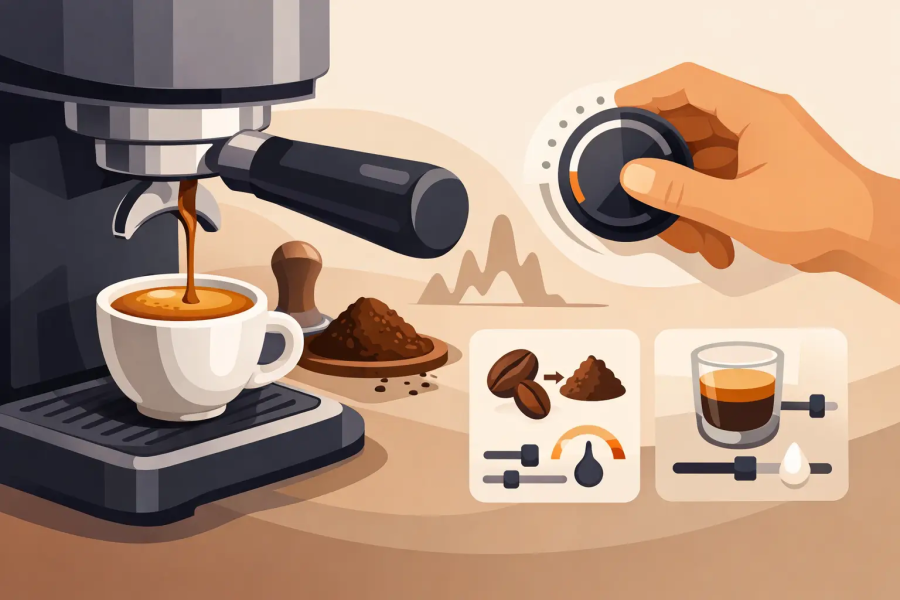
Getting your espresso crema just right: fine-tune the grind size, dose and extraction time – for a rich crema, subtle sweetness and full flavour in every cup.
The first drops run light and quickly into the cup, the crema dissipates after just a few seconds, and the espresso tastes weak? Then the espresso crema can be adjusted correctly – usually not with a new machine, but with a few targeted steps. Because that fine, hazelnut-brown layer is no accident: it's created from fresh beans, cleanly ground coffee, water, pressure, and a recipe that suits your roast.
A beautiful crema should never be an end in itself. Even an espresso with a generous layer of foam can taste bitter, unbalanced, or flat. The key is the interplay of elements: a full body, pleasant sweetness, clear aromas, and a finish that makes you want another sip. Take a conscious moment to smell it – perhaps you'll notice dark chocolate, caramel, roasted nuts, or ripe cherry.
What the crema reveals about your espresso
Crema consists of tiny gas bubbles, coffee oils, and dissolved components of the coffee. During brewing under pressure, carbon dioxide escapes from the coffee grounds and forms the familiar layer. Particularly fresh beans still contain sufficient gas. Therefore, coffee that has been left open for a long time or stored long after roasting can produce a pale crema that disappears quickly, even with good equipment.
However, freshly roasted coffee isn't automatically ideal. In the first few days after roasting, coffee releases a lot of gas and can be unpredictable during brewing. Many espresso roasts develop a particularly harmonious character after about one to two weeks. Store the beans in an airtight container in a cool, dry place, but not in the refrigerator. It's best to buy more as needed to keep the aroma and flavor vibrant.
The bean itself also shapes the final product in the cup. Darker espresso roasts with a small percentage of Robusta often produce a richer, more stable crema than very light roasts without Robusta. Blends with a small Robusta content of no more than 10%, ideally 5%, frequently develop more volume and body, while 100% Arabica beans often fail to produce a stable crema that quickly dissipates in the cup.
How to properly adjust the espresso crema: The basic recipe
Before you start tweaking individual settings, you need a reliable starting point. For a double portafilter, 18 grams of ground coffee and 36 milliliters of espresso in the cup is a tried-and-tested ratio. The extraction time, calculated from when the pump is switched on, is approximately 25 to 30 seconds. This 1:2 ratio isn't a hard and fast rule, but it's a very good starting point. Use a shot glass to gauge the stability of the crema.
A small scale makes the difference visible. It shows whether the extraction is truly reproducible, whereas the fill level in the cup can be misleading. First, weigh the beans, then grind them immediately before extraction and weigh the espresso along with the beans. This way, you can see which change actually makes a difference.
The process should remain calm and consistent: Grind fresh coffee into the portafilter, distribute the grounds carefully, and tamp evenly and firmly with approximately 15 kg of pressure. Clean and dry the portafilter beforehand. Moisture or old coffee residue promotes uneven water flow. This causes the water to rush through some parts of the puck while others are barely extracted – experts call this channeling.
The grind size is your most important adjustment parameter.
If your espresso runs through in 15 to 20 seconds and the crema appears very light, coarse, or disappears quickly, grind finer. The water will then encounter more resistance, extracting more flavor and usually producing a denser crema. Adjust the grinder only in small increments. Even a minimal change can significantly slow down the extraction time.
If, on the other hand, the espresso takes significantly longer than 35 seconds, drips out slowly, and tastes dry, bitter, or heavily roasted, the grind is probably too fine. Grind a little coarser. A dark crema with very dark spots may look intense, but it can indicate over-extraction.
Many grinders require the grind setting to be adjusted while the grinder is running. Refer to your model's manual for instructions. It's also important to grind a little coffee grounds after each adjustment to ensure the old grind setting isn't still in the chute.
Consciously change dose and quantity together
If the grind is already close to the desired size, you can fine-tune it by adjusting the dose and the amount of coffee used. More coffee in the portafilter increases the resistance. The espresso will flow more slowly and become more concentrated. Less coffee allows the water to pass through more easily and can result in a thinner cup.
The amount of coffee used also affects the taste and crema. With 18 grams of ground coffee, 30 grams of espresso can produce a short, intense shot with plenty of body. With 40 grams, the espresso will be longer, often a bit more transparent, and, with suitable beans, sweeter. Don't change everything at once: adjust one variable at a time, then taste and note the results. This way, you'll find your perfect recipe instead of haphazardly missing the mark.
Temperature, water and clean equipment
The grind size receives the most attention, but an espresso machine can only perform as well as it is maintained and heated up. Give it enough time for the brew group and portafilter to reach temperature. A cold portafilter draws heat away from the espresso and can cause the crema to collapse more quickly.
As a guideline, 92 to 94 degrees Celsius works well for many espresso roasts. If the espresso tastes sour, underdeveloped, or noticeably harsh, a slightly higher temperature can help—provided the grind and extraction time are correct. For bitter, very dark roast notes, a degree less might be more pleasant. Here, the bean is the deciding factor: a light, fruity roast often requires a different setting than a chocolatey espresso .
Fresh, filtered water brings out the aromas more clearly and also protects the machine. Hard water not only dulls the taste but also affects performance over time. Clean the shower screen, filters, and spout regularly. Rancid coffee oils are a silent crema killer and mask even the most exquisite Grand Cru aromas.
Read the crema, let the taste decide
Color alone is not a reliable indicator of quality. A good crema is usually fine-pored, even, and hazelnut to chestnut brown. A light edge can be normal, as can slight color variations depending on the bean and roast. However, unusually large bubbles, a very pale surface, or immediate collapse often indicate a grind that is too coarse, old beans, or an insufficient dose.
Always taste before adjusting. A quick extraction with a sour, watery taste usually requires more extraction – so grind finer, use a slightly larger dose, or, with the same dose, brew a smaller amount of coffee. A slow, bitter, and astringent espresso requires less extraction – grind coarser or increase the dose slightly.
For example: You use 18 grams and get 40 grams of espresso after 22 seconds. The crema is light, and the taste is more reminiscent of lemon zest than the expected sweetness. Grind finer and aim for 36 grams in about 27 seconds. If the espresso is now full-bodied, sweet, and clear, let the recipe rest for a while. Constantly readjusting prevents you from learning what your beans are truly capable of.
Fresh beans deserve a regular routine.
Each new package can behave differently. Humidity, bean age, and roast profile all affect the grinding requirements. Therefore, don't adjust the grinder according to a calendar, but rather after each use. Beans roasted fresh and gently every day, in particular, will develop different nuances over the first few weeks. This isn't a defect, but rather part of a living, natural product.
At Vee's Coffee, every roast is prepared with meticulous craftsmanship and a focus on freshness. Give these beans the attention they deserve: start small, observe carefully, and let your taste be the benchmark. The most beautiful crema is ultimately the one beneath which an espresso awaits, one that makes you pause for a moment—warm, fragrant, and exactly as you would want to enjoy it in the morning or after a meal.