


How long does coffee stay aromatic? The answer
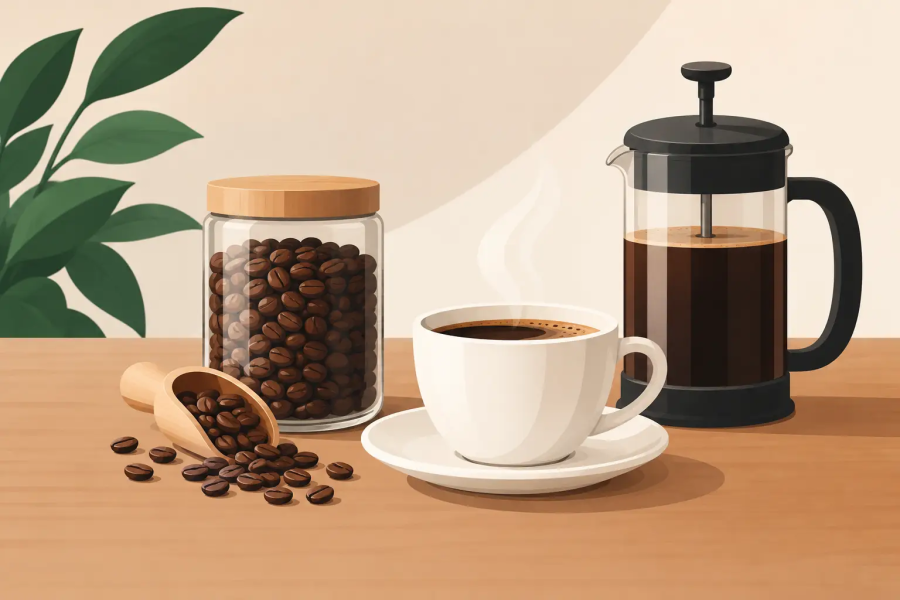
How long does coffee stay aromatic? Learn how beans, grind size, packaging and storage preserve aroma, sweetness and subtle notes – day after day at home.
The initial aroma upon opening a freshly roasted coffee bag is no mere detail. It reveals how much of the bean's delicate aroma remains: dark chocolate, caramel, honey, ripe cherry, or a gentle nuttiness. But how long does coffee retain its aroma? The short answer: whole beans, when stored properly, remain aromatic significantly longer than ground coffee. The precise answer depends on the freshness of the roast, the packaging, air, light, temperature, and your daily handling of the coffee.
How long does coffee stay aromatic?
After roasting, coffee begins to release carbon dioxide. This natural process is called degassing and is by no means a defect: it helps the aromas to fully develop. Freshly roasted beans therefore need some time before they reveal their well-rounded, full flavor in the cup.
For most filter coffees, the aroma is particularly well-balanced about five to seven days after roasting. Espresso often benefits from a little more time and frequently develops its most harmonious flavor between ten days and three weeks after roasting. After that, good coffee doesn't suddenly become undrinkable. It simply changes slowly: the aroma becomes more subtle, the sweetness less pronounced, and delicate fruity notes recede into the background.
As a practical guideline: Unopened, carefully packaged whole beans usually taste very good for several months. Once opened, they should ideally be enjoyed within four to eight weeks. Those who buy smaller quantities and open fresh packages regularly experience the roasting process at its finest. This is particularly noticeable with single-origin highland coffees , whose character can range from delicate floral nuances to notes of cocoa and caramel.
Whole beans stay fresh longer
The bean itself acts as its own aroma protector. Its firm structure slows down the contact of the valuable coffee oils with oxygen. This is why it retains its aroma significantly longer than ground coffee. Only during grinding is the surface area suddenly increased – and with it, the area exposed to air, moisture, and foreign odors.
Ground coffee should therefore be ground as close to brewing time as possible. Even after just a few minutes, some of the volatile aromatic compounds evaporate. After a few days in an opened package, the difference in the cup is usually clear: the aroma seems flatter, the cup less vibrant, and occasionally a bit dry in the aftertaste.
If you only make one cup in the morning, you don't need a professional grinder. However, a good home grinder with adjustable grind settings is one of the most worthwhile investments for better coffee. It not only preserves aroma but also allows you to adjust the extraction for pour-over, French press, fully automatic coffee machine, or portafilter.
What coffee can cost you in terms of aroma
Coffee doesn't go bad overnight. Rather, it gradually loses its flavor. Four factors particularly accelerate this process:
- Oxygen causes delicate coffee oils to oxidize. The result can be a dull, woody, or slightly rancid taste.
- Heat accelerates flavor loss and aging. Therefore, placing it above the stove or next to a radiator is not a good idea.
- Light puts additional strain on the beans, especially in transparent storage jars on the worktop.
- Moisture and odors are also problematic. Coffee absorbs foreign aromas surprisingly easily – for example, from spices, onions, or strongly scented foods.
Not every change is equally noticeable. A darker espresso roast often retains its flavor profile longer because its strong cocoa and roasted aromas linger. Lighter, more complex roasts with delicate citrus, berry, or floral notes, on the other hand, show signs of aging sooner. This doesn't mean that one roast ages better or worse—it simply changes in different ways.
Store coffee correctly: dark, airtight and quiet
The best way to store beans is surprisingly simple. Leave whole beans in their tightly sealed original packaging, provided it has an aroma valve and resealable closure. This protects against light and limits air exchange better than many decorative containers.
If you want to use a storage container, choose an opaque, clean, and completely dry container with a tight-fitting lid. It's best to only transfer the amount you'll use in one to two weeks. The rest should remain in its original, protected packaging. This way, you avoid opening the entire supply every morning and unnecessarily exposing the beans to a lot of fresh air.
The ideal location is a cool kitchen cupboard, away from sunlight, steam, and heat sources. Room temperature is perfectly sufficient, as long as it remains as constant as possible. A pantry is ideal, while a cupboard near the oven, dishwasher, or windowsill is less suitable.
Does coffee belong in the refrigerator?
Mostly no. Condensation and foreign odors are a risk in the refrigerator. It becomes especially problematic if the package is constantly taken out and re-chilled: the temperature changes can cause moisture to form, which impairs the aroma.
Freezing can be useful for larger quantities, but only with some care. Divide the beans into small, airtight portions, each lasting about a week. Only remove a portion once the previous one is finished, and only open it at room temperature. Repeated freezing and thawing should be avoided. For regular coffee enjoyment at home, however, buying smaller quantities as needed is usually the more aromatic and simpler solution.
The roasting date is more helpful than the best-before date.
A best-before date primarily indicates how long a product remains safe and marketable when stored correctly. For determining optimal flavor, the roasting date is far more informative. It reveals where your beans are on their flavor journey.
Freshly roasted coffee, roasted daily and gently by hand, has a clear advantage: you can consciously decide when you want to enjoy it. For a fruity filter coffee, wait a few days after roasting and then open the package at your leisure. For espresso, the beans often need to mature a little longer. Especially in a portafilter machine, coffee that is too young can be unstable due to excessive degassing, resulting in uneven extraction.
With fully automatic coffee machines, this effect is usually milder, but it's still worth checking the freshness. If you use beans that are neither fresh from the roaster nor have been sitting open in the cupboard for a long time, the cup will often be clearer, sweeter, and have a more pleasant finish.
How to recognize a fading aroma
Your senses are more reliable than any calendar. Smell the beans immediately after opening the package. Fresh coffee has a clear, complex, and inviting aroma. It can be reminiscent of chocolate, roasted nuts, caramel, milk, honey, or ripe fruit. If the aroma lacks depth, smells dusty, or is reminiscent of old cardboard, the roast has likely lost much of its intensity.
Similar signs appear in the cup. Coffee that's past its best doesn't necessarily taste bad, but it often tastes weaker. It lacks sweetness, the acidity seems less integrated, or the aftertaste is short and dry. With espresso, the crema may collapse more quickly. With filter coffee, the clear separation of individual flavor notes is often lacking.
Before you write off the beans, check the grind, water temperature, and dosage. A grind that's too coarse can make fresh coffee taste weak, just like a brewing temperature that's too low. Not every disappointing cup is a storage problem.
Plan for freshness, not just manage aroma.
Buy coffee the way you drink it: as a small, enjoyable supply rather than a year's worth. A two-person household often gets by well with package sizes that are used up in a few weeks. Those who switch between espresso, filter coffee, and decaffeinated beans can opt for smaller packages or sampler packs. This not only keeps the coffee fresher but also makes it fun to discover different origins and roast profiles.
A small ritual helps: When you open the package, write down the date, store the beans in a dark place, and only grind the amount needed for the next brew. That's all it takes to turn good beans into a cup that smells of coffee even before the first sip touches your lips.
If you've just discovered your favorite coffee, give it a good place in the kitchen cupboard - and treat yourself to the pleasure of drinking it not just any time, but exactly when it speaks most beautifully.