


Buying freshly roasted coffee beans made easy
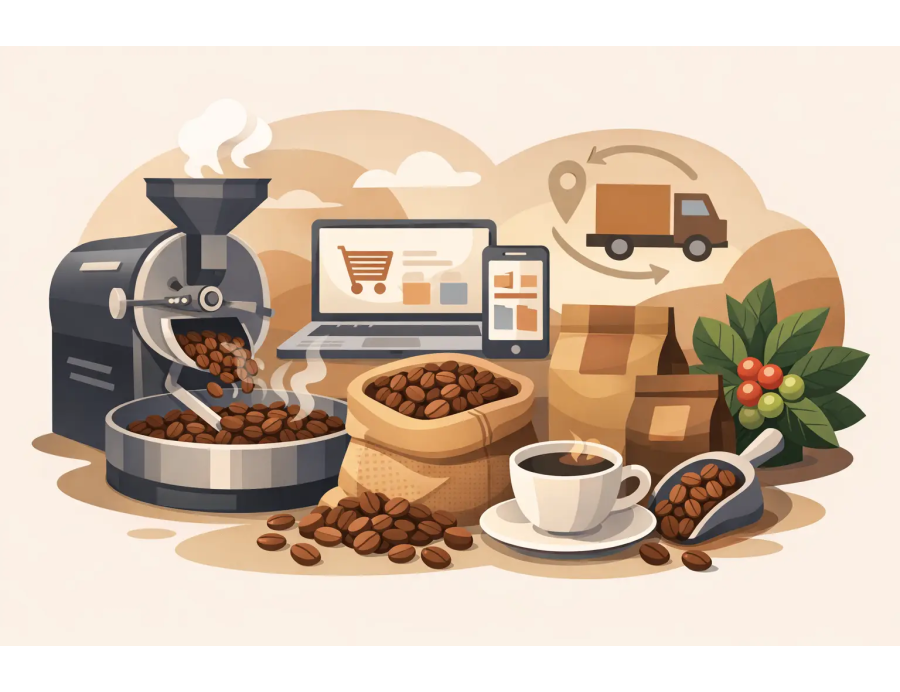
Buying freshly roasted coffee beans: How to recognise freshness, choose the right roast and origin to suit your brewing method, and enjoy more flavour in every cup.
The aroma upon opening the package, a rich crema in the cup, notes of caramel, dark chocolate, or ripe cherries: those who want to buy freshly roasted coffee beans are looking for precisely this difference. Because there's often a world of difference between a bean that's been sitting on a shelf for a long time and a carefully roasted, promptly shipped specialty. Freshness isn't just a marketing buzzword; it directly influences how vibrant, clear, and full-bodied a coffee tastes.
What really makes freshly roasted coffee beans special
Freshly roasted coffee begins with the roasting process itself. High-quality green coffees develop their potential not through haste, but through experience, attention to detail, and a suitable roasting profile. Slow, gentle hand-roasting allows the bean's natural aromas to unfold. Unwanted, sharp acids are softened, while nuances such as honey, nut, cocoa, or dried fruit are preserved.
Immediately after roasting, coffee beans release carbon dioxide. This phase is called degassing and is completely normal. Therefore, "fresh" doesn't necessarily mean you have to drink the coffee the same day. Especially for portafilter machines and fully automatic coffee makers, many espresso roasts actually taste better after a few days of resting: the extraction becomes more consistent, the crema more stable, and the sweet, chocolatey notes come to the fore.
However, coffee shouldn't be left too long either. Over time, the volatile aromatic compounds lose intensity. The beans then taste less fragrant in the grinder, the espresso becomes weaker, and the filter coffee less complex. Therefore, what's crucial is not an abstract "best before" date, but a verifiable roasting date and a roastery that produces fresh coffee on demand .
At Vee's Coffee, the beans are roasted by hand daily and then quickly packaged. This ensures that the coffee doesn't arrive as an anonymous warehouse item, but with the aroma that a good bean should have after roasting.
Buying freshly roasted coffee beans: What you should pay attention to
For most preparation methods, the aroma profile is particularly pronounced within a few weeks after roasting. Well-sealed whole beans often remain enjoyable for significantly longer, but the sooner you use them, the better.
Packaging matters too. Coffee beans need protection from oxygen, light, heat, and moisture. A lightproof aroma-preserving package with a valve allows the gas produced during roasting to escape without continuously letting air into the package. After opening, it's best to store the beans in their tightly sealed original packaging or in an airtight container – in a dry, dark place at room temperature.
Freshness alone doesn't make a favorite coffee. Origin, processing, and roasting are just as important. A washed highland coffee from Africa can taste floral, citrusy, or berry-like. Coffees from Latin America often exhibit a harmonious blend of nutty, milk chocolate, and subtle sweetness. Beans from Asia and the Pacific, depending on their origin, offer more body, spice, and earthy depth. Those who prefer low acidity will often find balanced, slightly darker roasts to be a more uncomplicated everyday companion.
Choose the roast level appropriate for the preparation.
For espresso, cappuccino, and latte macchiato, roasts with a full body, good sweetness, and lower acidity are suitable. In milk, notes of dark chocolate, caramel, nougat, or roasted nuts can be quite pronounced. An espresso roast can be somewhat darker.
For filter coffee, pour-over, French press, or Aeropress, a lighter and more nuanced roast is often desirable. Here, clear fruity notes, a delicate acidity, and a light, tea-like elegance are expressly sought. This doesn't mean that lighter roasted coffee automatically tastes sour. Good acidity is more reminiscent of juicy fruit than vinegar or lemon juice and is complemented by sweetness and a pleasant body.
With a fully automatic coffee machine, it all comes down to your habits. If you primarily drink café crème and milk-based beverages, balanced, medium to dark roasted beans with low acidity are a safe choice. If you prefer black coffee, a single-origin bean with a distinct flavor profile can be a real treat. The machine grinds, doses, and extracts automatically—but it's still worth taking a quick look at the grind size, coffee strength, and temperature. Even small adjustments can noticeably improve the quality of fresh beans.
Buy whole beans and grind them just before brewing.
The best way to preserve the aroma is to keep the whole bean. Grinding significantly increases the surface area of the bean, causing the precious aromatic compounds to escape quickly. Ground coffee is convenient, but rarely the best choice for those who want to savor the experience. A simple grinder with a good grinding mechanism is therefore one of the most worthwhile investments for better coffee at home.
The correct grind size depends on the brewing method. Espresso uses a fine grind, filter coffee a medium grind, and French press a significantly coarser grind. If an espresso runs too quickly and tastes weak or acidic, a finer grind usually helps. If it drips very slowly and tastes harsh and bitter, a slightly coarser grind is advisable. For pour-over coffee: if the coffee tastes watery, grind finer; if it tastes dry and over-extracted, grind slightly coarser.
Give your fresh beans the attention they deserve. Use clean water, clean your grinder and brew group regularly, and don't just measure by feel. For filter coffee, a ratio of about 60 grams of coffee per liter of water is a good starting point. For espresso, the amount of beans, brewing time, and volume of the drink all work together to determine the result. There's no perfect recipe for all beans—but there is a good one to get started with and then fine-tune as you go.
Single-origin, blend, organic or decaffeinated?
Single-origin coffees allow you to taste their origin immediately. They are ideal if you want to experience specific flavor profiles: a honey-like sweetness, delicate cherry notes, or a nutty, cocoa-like depth. Blends, on the other hand, are deliberately composed. They can be particularly well-balanced, work reliably in fully automatic coffee machines, and develop a harmonious richness in milk-based drinks.
Organic coffee is a good choice if certified cultivation is important to you. However, it doesn't automatically guarantee that you'll like the taste. Flavor arises from the interplay of variety, altitude, harvesting, processing, and roasting. Ideally, you should choose both: organic quality if it aligns with your values, and a flavor profile that suits your cup.
Decaffeinated coffees deserve more attention than their old reputation suggests. Good decaffeinated coffees can be full-bodied, sweet, and aromatic—perfect for the evening or for anyone who wants to drink less caffeine but doesn't want to miss out on the true coffee experience. Sample packs are especially useful if you're undecided between different countries of origin, roast levels, or brewing methods. Instead of relying on descriptions, take your time to taste your way to your favorite.
This way your coffee stays aromatic until the very last bean.
It's best to buy quantities that you'll use within a reasonable timeframe. For a household with one or two daily coffee drinkers, a smaller package can be a fresher choice than a large supply. Those who drink a lot of espresso or offer coffee in the office can, of course, plan for a larger quantity – as long as the opened beans are protected from air and heat.
Don't transfer the entire package into a large container if it will be opened frequently. A tightly sealed container of the appropriate size or the original packaging, carefully closed, is better. Also, don't buy based solely on intensity ratings. "Strong" often describes the roast level or body, not necessarily the caffeine content, and certainly not the flavor quality.
The best coffee bean is ultimately the one that makes you pause for a moment in the morning before taking your first sip. Choose a roast that suits your brewing method, grind it fresh, and let your taste have the final say. Then an everyday cup becomes a small, fragrant ritual.