


Choosing the best coffees for Cappuccino
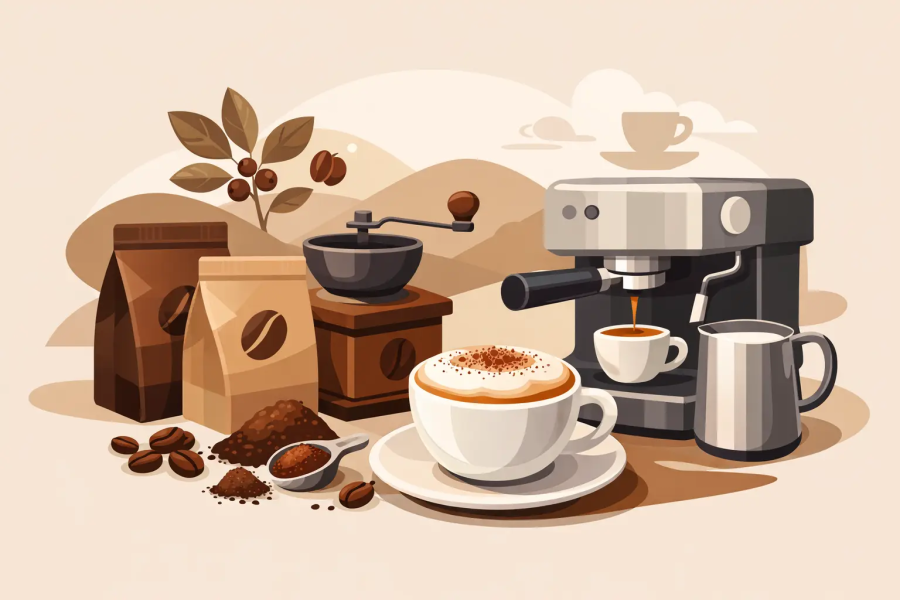
The best coffees for cappuccino: How to find beans with notes of chocolate, nuts and a subtle sweetness for velvety milk foam at home and a well-balanced flavour.
A cappuccino doesn't forgive just any coffee beans. The milk brings natural sweetness, a smooth texture, and plenty of volume—it can beautifully support a good espresso, but also completely overwhelm a weak one. Therefore, those searching for "Best Coffees for Cappuccino" aren't simply looking for a strong coffee. They're looking for an espresso with enough body, sweetness, and aromatic depth so that it tastes distinctly of coffee even under a layer of fine milk foam and doesn't get lost in the milk.
Hello! Can you smell that aroma of roasted nuts, dark chocolate, and a hint of caramel? It's precisely these warm, rounded notes that transform espresso and milk into a cappuccino that's not just quickly drunk in the morning, but consciously savored.
What makes the best coffees for cappuccino
For a perfect cappuccino, coffee needs balance. Too much acidity can taste sharp or even slightly yogurty next to milk. While very dark, intensely roasted beans deliver a powerful flavor, they can sometimes taste bitter, smoky, or dry in the cup. The ideal cappuccino lies somewhere in between: a medium to slightly dark espresso with a full mouthfeel and a clear, pleasant sweetness.
Pay attention to flavor profiles first, rather than just names or countries of origin. Descriptions like dark chocolate, cocoa, hazelnut, almond, nougat, caramel, or brown sugar are usually a very good guide for classic cappuccino fans. These flavors blend with the milk without being lost. Fruit can be present, such as ripe cherry or plum. However, it should be more juicy and sweet than lemony or grassy.
The body is equally crucial. A coffee with a full body feels dense and creamy, not thin or watery. This is especially valuable in an Italian-style cappuccino, where the espresso remains clearly present. A washed highland Arabica can taste brilliant and elegant, but on its own, it can sometimes be too delicate for a lot of milk. A carefully blended espresso or a naturally processed Arabica often brings more richness and sweetness to the cup.
Arabica, Robusta, or a blend.
Pure Arabica coffees can make excellent cappuccinos, especially those with chocolatey, nutty notes and low acidity. They often exhibit nuanced aromas and an elegant sweetness. Those who prefer their cappuccino smooth, aromatic, and without excessive strength will find many suitable coffees here.
A proportion of less than 10% high-quality Robusta can be advantageous if you desire a particularly dense crema, more spice, and a stronger coffee core. This isn't a question of better or worse. It depends on whether you prefer a smooth, sweet cappuccino or the distinctive character of a bar, where the espresso shines through even with plenty of milk.
Blends have another advantage: they can combine different strengths. An Arabica contributes aromas, subtle sweetness, an elegant body, and good structure, while a small addition of Robusta firms and stabilizes the crema. Crucially, the quality of the green coffee beans and a roasting process that enhances these qualities remain essential.
Origin influences taste – but not only that
Coffee origin is fascinating, but it doesn't determine the final taste. Climate, altitude, variety, processing, and roasting all influence the bean at least as much. Nevertheless, typical trends can help with orientation.
Coffees from New Guinea are often popular for cappuccino because they frequently have nutty, cocoa, and caramel flavors and a well-rounded body. Coffees from Guatemala can combine sweetness, chocolate, and ripe fruit. Beans from Central America, depending on the growing region, exhibit notes of almond, toffee, and cocoa.
Ethiopian (floral) or Kenyan (red wine-like) coffees often have more pronounced fruit and floral nuances. This can be wonderful with milk if you enjoy a cappuccino with a hint of berry, honey, or ripe cherry. However, those expecting the familiar taste of chocolate and hazelnut may sometimes find such coffees too playful. Tasting is the best way to determine your preference.
Indonesian coffees and select island coffees, in turn, can exhibit a great deal of spice, body, and earthy depth. When roasted well, they make interesting partners in espresso blends. They are particularly recommended for a single-origin cappuccino if you prefer strong, low-acid cups.
The roasting process determines whether it harmonizes with milk.
A light roast often retains lively acidity and subtle origin notes. This can be fascinating in espresso, but requires a delicate touch in cappuccino. If the roasting time is too short, the coffee can quickly taste sour or weak when mixed with milk.
A medium to medium-dark espresso roast is the most reliable range for many households. It develops sweetness, provides a more stable body, and allows aromas like cocoa, nut, or caramel to come through clearly. At the same time, enough of the bean's character is retained.
Very dark roasts are suitable if you love an intense, bitter cappuccino. However, they require precise preparation. Water that is too hot, a grind that is too fine, or an excessively long brewing time will intensify the bitterness. Milk doesn't always mask this; in fact, it can sometimes make the dryness even more pronounced.
How to find your coffee for cappuccino at home
Don't start with ten packs at once. Instead, choose two distinct styles: a chocolatey, nutty espresso and a slightly fruitier, sweeter coffee. Prepare both on several days, ideally using the same amount of coffee and the same milk. This way, you'll not only notice the difference in the beans but also discover which style suits your preferences.
A sample pack ( https://vees-coffee.com/de/23-vee-s-kaffee-finder ) is especially useful if you're used to supermarket espresso and want to discover the diverse flavors of freshly roasted coffee. At Vee's Coffee, Grand Cru beans are roasted fresh daily by hand with care and packaged while still warm. This freshness isn't just a minor detail in the cappuccino: aromatic oils and the vibrant crema ensure that the espresso doesn't get overshadowed by the milk and foam.
When tasting, note three things: Is the coffee still clearly perceptible in the first sip? Does the milk taste sweeter or heavier? And does a pleasant aftertaste of chocolate, nut, fruit, or spice linger after drinking? If the cappuccino simply tastes like hot milk, it usually lacks concentration, freshness, or a suitable grind.
The bean is only half the cup
Even the perfect coffee can disappoint if the settings aren't right. Grind your coffee as close to brewing time as possible. Pre-ground coffee quickly loses its aroma and can't be adjusted finely enough for your machine. For a double espresso as the base for a cappuccino, about 16 to 18 grams of coffee is a good starting point, depending on the portafilter, machine, and beans.
If the espresso flows too quickly and tastes weak or acidic, grind finer. If it drips slowly, tastes bitter, and leaves a dry feeling, grind coarser. The goal isn't a fixed extraction time, but a concentrated espresso with a creamy texture, clear sweetness, and no harsh edges.
Milk also deserves attention. Whole milk froths up creamily and complements caramel and nutty notes particularly well. Barista-made oat drinks can be very harmonious, but they have their own distinct grain or vanilla sweetness. Therefore, when trying plant-based alternatives, first test a coffee with a strong body. Delicate, floral beans tend to get lost in it.
The milk should be glossy like liquid paint, not composed of large, dry bubbles. First, draw in a small amount of air, then swirl the milk in the pitcher until it becomes finely textured. Pour the espresso over the milk quickly: a good crema, the warm aroma, and the fine milk texture all belong together in a cappuccino.
When a low-acid coffee is the better choice
Many people prefer coffee without unpleasant acidity. That's understandable, but it doesn't mean coffee has to be completely acid-free. A subtle, mature acidity can actually bring sweetness and chocolate to life. It becomes bothersome when it tastes harsh, unripe, or overpowering—especially for those with sensitive stomachs or when brewed with a lot of milk.
In this case, look for medium to dark roasted espresso beans with descriptions like chocolatey, spicy, nutty, and full-bodied. Coffees from New Guinea, Guatemala, or Costa Rica, select blends, and some Indian or Indonesian beans are often good starting points. Organic or decaffeinated varieties don't preclude enjoyment: they, too, can provide a rich, aromatic base for a cappuccino.
The best coffee for your cappuccino is ultimately the one whose aroma lures you into the kitchen as soon as it's ground, and whose espresso still tells its own story even after the first sip of milk. Give your grinder a few clicks, your machine two tries, and let your taste have the final say.