


Coffee roasters compared for the best taste
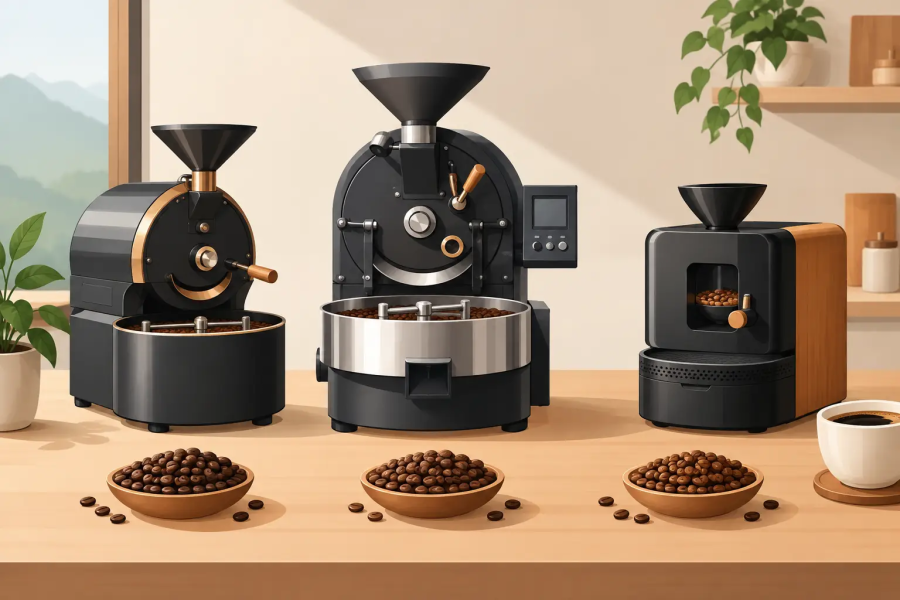
Coffee roasters compared: How to recognize freshness, origin and roasting craftsmanship and find beans that suit your taste and preparation.
The aroma upon opening a freshly roasted package often reveals more than a fancy label: warm notes of cocoa, roasted nuts, perhaps caramel or a hint of ripe cherry. When comparing coffee roasters, therefore, it's not just about price or the number of varieties. What matters is how carefully green coffee beans are transformed into a coffee you truly look forward to in the morning.
Anyone who usually buys coffee beans from the supermarket will quickly find themselves with a lot of questions when visiting a roastery for the first time. Arabica or Robusta? Light or dark? Single-origin or blend? Organic, decaffeinated, espresso or filter coffee? The good news is: you don't need to know every technical term by heart. With a few clear criteria, you can find a roaster and a bean that suit your taste and brewing method.
Coffee roasters compared: These criteria count
A good roaster begins their work long before the roasting oven. The quality of the green beans, their origin, the harvest, and the careful selection determine the aromatic potential that will later end up in your cup. Highland coffees ripen under different conditions than coffees from lower altitudes. Highland coffees ripen more slowly and for a longer period with lower yields. As a result, the green coffee accumulates more sugar, which caramelizes during roasting, and forms more fats, which transform into aromatic oils. This can manifest as more intense aromas, delicate, complex fruit, or a pronounced sweetness—provided the roasting process brings out these qualities.
Pay attention to verifiable information about origin and variety. A coffee with a country, region, or farm reference is easier to categorize in terms of taste than an anonymous bean. This doesn't mean that blends are inferior. On the contrary: A well-composed blend can combine body, creamy texture, and reliable flavor. It is often an excellent choice for fully automatic and espresso machines. Single-origin coffees, on the other hand, are interesting if you want to consciously discover the unique characteristics of a specific origin.
Equally important is the roasting philosophy. Small batches and a gentle, sufficiently long roasting process allow the roaster to precisely adjust the temperature and time to each individual bean. The goal is not to make every variety taste the same. The goal is to reduce bitterness and unwanted acidity without masking the bean's delicate notes with an overly dark roast.
Freshness is not a detail, it's taste.
Coffee is alive after roasting. The beans initially release carbon dioxide and continue to develop their aroma. After a few days, they are usually particularly well-balanced, after which the aroma slowly begins to diminish. Therefore, it's worth looking at the roasting date rather than just a long best-before date.
A roaster who produces regularly and according to demand can deliver significantly fresher beans than those that have been sitting in storage or on the shelf for a long time. This is particularly noticeable with espresso: fresh beans tend to form a denser, hazelnut-colored crema and have a more intense aroma. Filter coffee also tastes clearer and more nuanced when the beans haven't lost their aroma over months.
Buy enough coffee to consume within a few weeks. Store the beans in a cool, dry place away from light – ideally in the tightly sealed original packaging. And please grind them only immediately before brewing: there are often only minutes between the grinder and the cup, during which time aromatic compounds can dissipate.
Roast level: Don't pit light against dark.
The roast level is one of the most visible comparison criteria, but it's not a judgment of quality. Light roasts often retain the lively, characteristic acidity of a bean. They can taste of citrus, berries, tea, or blossoms and are particularly well-suited for filter brewing methods if you enjoy discovering nuanced aromas.
Medium roasts often combine sweetness, body, and a restrained acidity. Notes of milk chocolate, honey, nuts, or caramel can be found here. They are versatile and, depending on the coffee, work well in both pour-over and fully automatic coffee machines.
Darker espresso roasts usually bring more roasted aromas, spice, and a stronger body to the cup. They are wonderfully suited to portafilter machines, stovetop espresso makers, and many fully automatic machines, especially if you drink espresso, cappuccino, or latte macchiato.
Those sensitive to acidity or who dislike acidic coffee should consider darker roasts, such as those from Vee's. Often, gently roasted, balanced espresso beans or naturally milder origins (monsooned Malabar) are a more palatable solution. Descriptions like chocolatey, nutty, caramel, or low acidity provide better guidance than the bean's color alone.
Read about the origin, better understand the taste
Coffee from Latin America is often known for its balanced cup with nutty, cocoa-like notes and a gentle sweetness. Beans from Africa can be more vibrant and fruity, with hints of berries, citrus, or cherry. Coffees from Asia and the Pacific, depending on their origin, frequently exhibit a full body, earthy spice, or dark chocolate notes.
These are trends, not hard and fast rules. Processing, variety, harvest, and roasting profile significantly alter the flavor. That's precisely where the appeal lies: an Ethiopian coffee might be fragrant and floral, while another tastes of stone fruit and cocoa. Tasting is more sensible than hastily committing to a particular continent.
If you're still searching for your perfect coffee, start with your usual drink. For black filter coffee, a medium or dark roast is ideal. For espresso with a rich crema, balanced to more intense roasts are best. If you primarily drink milk-based beverages, choose beans with sufficient body and a chocolatey-nutty base – their flavor will remain present alongside the milk and won't get lost in it.
How to properly assess transparency, organic products and decaffeination
A trustworthy roaster will clearly explain what's in the package. This includes information about the origin, roast level, suitable preparation methods, and ideally, the expected flavor profile. Certified organic coffee can be an additional factor if you're specifically looking for organically grown beans. However, organic certification isn't a guarantee of flavor: the quality of the raw coffee beans and the roasting expertise are still crucial.
Decaffeinated coffee is particularly worth a closer look. Good decaffeinated beans don't taste like a sacrifice; instead, they can be creamy, chocolatey, and full-bodied. The decaffeination process and careful roasting help to preserve as much aroma as possible. It's a truly enjoyable option for the evening or when reducing your caffeine intake .
Be wary of grand promises made without concrete details. Terms like "premium" or "specialty" sound appealing, but they don't replace verifiable origin or a fresh roast date. Good advice should be expert, but it should make your decision easier, not more complicated.
What fits into your everyday life?
The best coffee isn't necessarily the rarest or most expensive, but rather the one you enjoy preparing and drinking. Those who use their fully automatic machine in the morning need a reliable bean that tastes good even with slight variations in grind size and water quantity. Those who experiment with scales, hand grinders, and filters on the weekend will find joy in different origins and subtle flavor profiles.
Sample packs are especially helpful when comparing different coffee roasters . Instead of committing to one large pack, you can taste several roasts side by side. Brew as similar amounts as possible using the same method and pay attention to the aroma, sweetness, acidity, body, and aftertaste. Feel free to jot down two or three impressions. After just a few cups, it will become clearer whether you prefer dark chocolate or light fruit, a robust body or an elegant lightness.
Service is also part of the overall experience. A wide selection is pleasant, but can be overwhelming. Clear categories for espresso, filter coffee, fully automatic machines, organic and decaffeinated options, as well as personalized guidance based on taste preferences, are therefore helpful. At Vee's Coffee, Grand Cru beans are gently roasted by hand daily and packaged while still warm – an approach that understands freshness not as a marketing buzzword, but as an integral part of the enjoyment.
Don't just compare, consciously try things out.
A comparison becomes valuable when it improves your own cup. Don't look for the one winner for everyone, but rather for the coffee that suits your water, your grinder, your machine, and your taste. Open the next package consciously, smell the beans, and give a new origin a fair chance. Perhaps your new morning coffee is already waiting for you in the next freshly roasted cup.