


Enjoying freshly roasted coffee beans every day
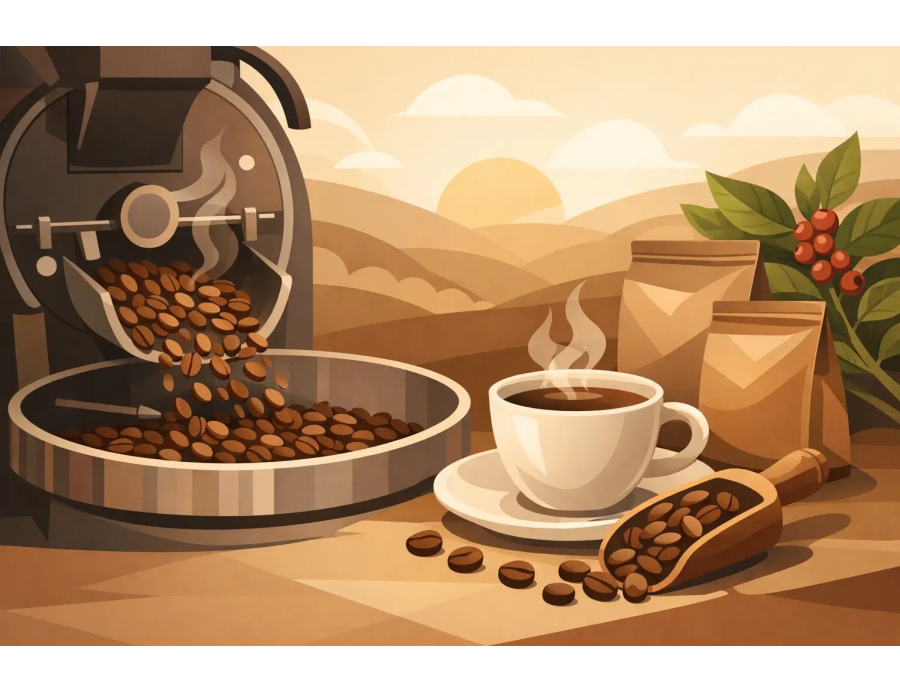
freshly roasted coffee beans retain their aroma, sweetness and character. Find out exactly what matters when it comes to roasting, resting and storing coffee at home.
The moment you open the coffee packet, it already reveals a great deal: if you catch a whiff of cocoa, caramel, ripe fruit or roasted nuts, the enjoyment begins long before the first sip. Coffee beans that are roasted fresh every day make precisely this difference noticeable. They bring the aroma of their origin to life in the cup – provided that the roasting, resting time, grind size and storage are all just right.
Freshness is not merely a sales pitch. Coffee is a natural product containing volatile aromatic compounds. After roasting, the bean changes day by day: first, its flavour develops; later, it gradually loses its intensity. Anyone who buys coffee with care can make the most of this period and ensure that every cup is significantly more aromatic.
What sets freshly roasted coffee beans apart
Green coffee beans do not yet smell like the coffee we love. It is only the roasting process that sets hundreds of chemical reactions in motion: sugars and amino acids react with one another, acids undergo changes, and the solid, pale bean is transformed into a fragrant source of aroma. Whether notes of dark chocolate, milk, honey, cherry or caramel come to the fore depends not only on the growing region, but also on how carefully the beans are roasted.
With daily roasting tailored to demand, the distance between the roaster and dispatch is minimal. At Vee's Kaffee, the beans are packaged promptly after roasting, whilst they are still warm. This ensures that much of what defines a Grand Cru coffee is preserved: its distinct aroma, its natural sweetness, its body and the characteristic flavour profile of each origin.
That doesn’t mean that coffee tastes perfect on the day it’s roasted. Immediately after roasting, the bean releases a lot of carbon dioxide. This natural process, also known as degassing, has a particular effect on espresso. Coffee therefore needs a little time to settle so that it develops a balanced flavour in the cup. ‘Freshly roasted’ doesn’t mean it should be consumed in a hurry, but rather that it should take a sensibly short journey to reach the right level of maturity in your home.
Freshness needs the right amount of rest
With filter coffee, the flavour often develops beautifully after just a few days. This timeframe can vary depending on the variety, roast and method of preparation. Light to medium-bodied highland coffees often come across as particularly clear, fragrant and lively. In a hand-filter carafe, you may detect fruity cherry notes, a subtle honeyed sweetness or a hint of tea.
Espresso roasts usually require a little more patience. After about one to two weeks, they often extract more evenly: the crema becomes more stable, the flow more predictable, and the flavours of chocolate, nuts and caramel blend more harmoniously. Anyone using a portafilter machine should therefore not only adjust the grind size but also pay attention to the roast date.
However, there is no hard and fast rule that applies to all coffees. Very dark-roasted beans behave differently to a lighter roast from Ethiopia, and a moka pot has different requirements to a fully automatic machine. That is precisely the beauty of good beans: a little care is rewarded with a cup that truly tastes of its origin.
How to tell if your coffee is fresh
Fresh coffee does not necessarily taste bold or spectacular. Often, its quality is revealed through its clarity. The cup tastes sweet, well-rounded and clean, rather than flat, dusty or dull. The aroma is clearly noticeable when the beans are ground. With espresso, a fine, hazelnut-coloured crema may form, although this alone is not a guarantee of quality.
Nor should the surface of the bean be mistaken for a quick test. Oil may appear on very dark-roasted beans and is not a clear indication of freshness or age. More important factors are the roast date, careful packaging, traceable handling of the beans and, of course, your own taste.
Why hand-roasting preserves the character
A good roast does not follow a rigid formula. Beans from Brazil, Kenya, Guatemala, or Indonesia differ in density, size, moisture content, and structure. Consequently, they require specific roast profiles to bring out their best qualities. Roasting too quickly or at too high a temperature can result in beans that are dark on the outside yet underdeveloped on the inside, leading to a flavor that is harsh or unbalanced.
Gentle, manual roasting allows time for flavors to develop fully. It preserves pleasant acidity—avoiding any sourness—while simultaneously drawing out greater sweetness and a full body. People switching from supermarket coffee to high-quality whole beans particularly appreciate this difference: less bitterness, more depth, and an aftertaste that lingers.
However, a dark espresso is not inherently superior to a lighter filter coffee. For a cappuccino, the coffee needs to be robust enough to stand up to the milk, whereas an elegant, single-origin high-altitude coffee might be the better choice for a manual pour-over. Ultimately, the right choice depends on how you are brewing the coffee and the flavor profile you are looking for.
How to keep freshly roasted beans tasting great for longer
Even the best roast can lose quality if the beans are left exposed next to the stove. Oxygen, heat, moisture, and light accelerate the loss of aroma. Therefore, store coffee in its original, tightly sealed packaging—provided it has an aroma valve—and keep it away from light. A cool kitchen cupboard is usually a better choice than a shelf near the stove.
The refrigerator is rarely a good option for your daily coffee supply, as beans can absorb moisture and foreign odors there. Constantly taking the coffee out and putting it back creates temperature fluctuations that compromise the aroma. Freezing can be an exception if you wish to store larger quantities for an extended period; in this case, portion the beans into airtight containers and remove only the amount you intend to use completely.
It is better to buy quantities that suit your consumption habits. For a household that drinks two cups a day, a smaller package often makes more sense than a large supply meant to last several months. Furthermore, grind the beans as close to brewing time as possible. Whole beans preserve their aroma far better than pre-ground coffee—plus, the grinder fills your kitchen with that signature aroma.
Finding the right coffee for your brewing method
Fresh beans only reveal their full potential when the grind size, water volume, and contact time are all balanced correctly. For fully automatic machines, medium-strength roasts that aren't too oily are often a hassle-free choice. They produce a well-rounded coffee with nutty, chocolatey, or caramel notes that works equally well black or with milk.
For portafilter machines, you might opt for an espresso with more body. If the extraction runs too fast and tastes thin or sour, a finer grind usually helps. If it drips slowly and tastes bitter or heavy, try a slightly coarser grind. Always adjust just one setting at a time and give the grinder a moment to stabilize.
With manual pour-over methods and the French press, the coffee's origin and roast profile can really shine. A coffee with fruity elegance often tastes wonderfully clean and nuanced in a pour-over, while a full-bodied Latin American roast can reveal its chocolatey character in a French press. If you are still exploring, a trial pack is a better bet than buying a random large bag; experiencing different origins, roast levels, and flavor profiles helps you quickly identify your own preferences.
Organic-certified coffees and decaffeinated variants should certainly be part of the mix, too. Enjoyment doesn't have to be tied to caffeine or a specific brewing method; a high-quality decaf can taste smooth, aromatic, and surprisingly full-bodied in the evening.
Freshness as a daily ritual
A good coffee bean doesn’t require any complicated ritual. It just needs a bit of care in the right places: buy it freshly roasted, let it rest for the right amount of time, store it in small batches and grind it just before brewing. Then that quick cup in the morning becomes a little, reliable moment of pleasure.
Hello! Can you smell that aroma too? Next time you open the packet, take a moment to grind your beans fresh and savour the flavour. Perhaps today you won’t just be tasting coffee, but caramel, dark chocolate or a hint of ripe cherry.