


How to properly store coffee beans at home
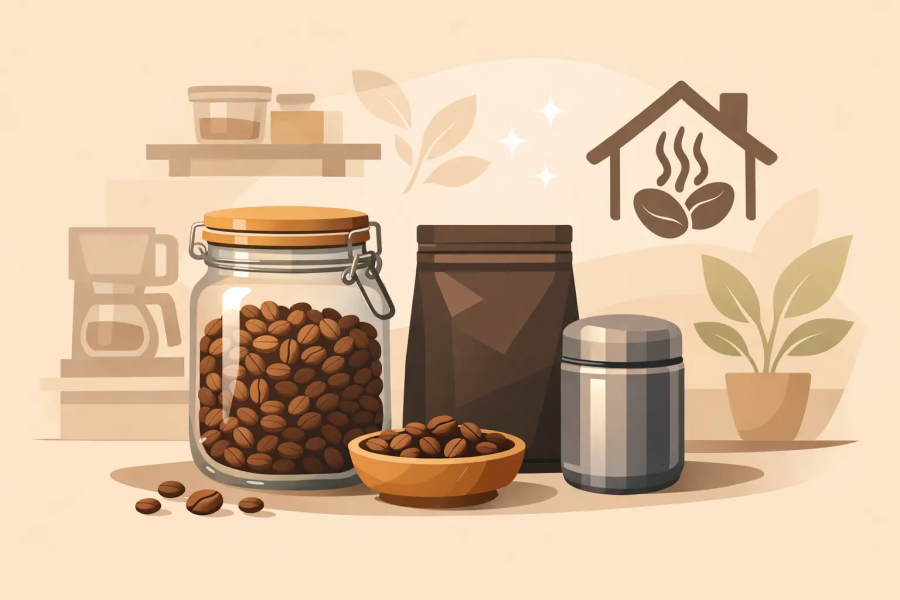
How to properly store coffee beans at home: This is how you protect the fragrance, sweetness and delicate aromas from light, air, heat and moisture - day after day in every kitchen.
The first aroma upon opening a freshly roasted package is a small promise: dark chocolate, roasted nuts, caramel, perhaps cherry or honey. To ensure this promise translates into your cup, you should store your coffee beans properly at home. Even a carefully crafted Grand Cru roast loses its character if the beans are exposed to light, air, and moisture for too long.
The good news: You don't need a special cellar or expensive equipment. With the right space, suitable packaging, and by keeping an eye on your actual consumption, freshly roasted coffee stays fresh for a long time – from the first to the last espresso.
What coffee beans lose their aroma
Roasted beans are full of delicate, volatile aromatic compounds. After roasting, they initially release carbon dioxide. This completely natural process partially protects the aroma, but it doesn't last forever. As soon as oxygen comes into contact with the beans in larger quantities, oxidation sets in: Over time, the coffee tastes flatter, less sweet, and occasionally dull or slightly rancid.
Four factors accelerate this loss of aroma particularly significantly:
- Air: causes valuable oils and flavorings to oxidize.
- Light: promotes the degradation of sensitive components.
- Heat: accelerates the aging of the beans.
- Oxygen: Coffee oxidizes when the packaging is opened and becomes increasingly rancid after about 3 months.
- Moisture: is the biggest problem, because coffee quickly absorbs odors and water.
Largely fluctuating temperatures are also unfavorable. The spot right next to the stove, oven, dishwasher, or a sunny window might seem practical, but it's not a good location for coffee beans.
How to properly store coffee beans at home: the best place
The best place to store your beans is in a cool, dry, and dark spot, such as a closed kitchen cupboard. Cool means a normal, ideally constant room temperature – not freezing cold. A cupboard against an interior wall, away from radiators and cooking steam, is usually ideal.
Many people keep their coffee readily available on the countertop. This works if the container is opaque and not placed directly next to a heat source. Those who grind their own coffee every morning can afford to be convenient. The key isn't so much the perfect storage location, but rather the sum of small habits: don't leave the package open unnecessarily, close the container immediately after taking out a cup, and don't leave the coffee in direct sunlight.
The original packaging is often the best can.
Freshly roasted beans ideally come in an aroma-tight package with a one-way valve. This valve allows excess carbon dioxide to escape without letting much oxygen back into the package. This is a real advantage, especially in the first few days after roasting.
Therefore, beans can remain in their original packaging. After each use, gently squeeze as much air as possible out of the bag, seal it tightly, and store it in a dark place. A clip or a neatly folded closure helps, but does not replace a properly sealed bag.
A coffee canister is useful if it's truly lightproof and seals tightly. Canisters with an inner seal or vacuum lid are particularly practical. However, even then, don't buy a huge canister for a small amount of coffee. The more empty space there is in the container, the more oxygen surrounds the beans. A canister should be roughly the right size for the amount of coffee you've opened.
If you have a nice tin on your shelf, you can simply place the original packaging inside it. This way, the valve remains intact, and the tin also protects against light. This solution combines convenience with freshness.
How much coffee should be opened?
For everyday use, a simple rule is helpful: only open as much coffee as you will consume within two to four weeks. The exact timeframe depends on the roast level, the brewing method, and your personal taste. Light, complex roasts often display delicate fruity notes particularly clearly when fresh. Darker espresso roasts tend to remain stable for a bit longer, but they also lose sweetness and depth if left open for months.
A single-person household doesn't necessarily need to buy a large pack. Two smaller packs are often the more flavorful choice: one is consumed, the other remains unopened. For households with several coffee drinkers or an office with regular consumption, a larger pack can be a very good option, provided it's consumed quickly.
At Vee's Coffee, the beans are freshly and gently roasted by hand every day. For you at home, this means: don't buy as much as possible in advance, but rather plan for freshness. If you want to try several varieties, it's better to have smaller quantities on hand – for example, a chocolatey espresso roast for your portafilter and a lighter highland coffee for your filter.
Grind first, then brew
The most effective rule for freshness doesn't concern storage in the cupboard, but the moment before preparation: Grind the beans only immediately before brewing. Ground coffee has a much larger surface area than whole beans. This allows oxygen to reach the aromatic compounds much faster.
Even after a short time, ground coffee loses a significant amount of its aroma and vibrancy. Pre-ground coffee is certainly convenient for a quick cup. However, anyone who wants to experience the sweetness of a caramel espresso, the clear fruitiness of an African coffee, or the smooth richness of a blend will noticeably improve the quality with a good grinder.
The grinder also deserves some attention. Regularly remove old coffee grounds, as they can oxidize overnight and make the next brew taste bitter or musty. Never store pre-ground coffee in the bean hopper.
Is it okay to freeze coffee beans?
For daily use: no. For longer-term storage: yes, under certain conditions. Freezing can be useful if you drink coffee infrequently, want to preserve a limited-edition roast for longer, or need to store several kilograms for many weeks. In these cases, the beans should be packaged in small, airtight portions – only as much as you will consume within a few days.
It's important to freeze a portion only once and allow it to come to room temperature completely sealed before opening. Otherwise, condensation can form on the cold beans. Repeated freezing and thawing does more harm than good to the quality.
For an opened, everyday portion of coffee, the freezer is unnecessary. The dark kitchen cupboard remains the simpler and usually better solution. And please note: the refrigerator and freezer are not tools for reviving stale coffee. Lost aromas will not return.
How to tell that beans no longer taste fresh
The absence of visible oil on the bean is not a reliable warning sign. Depending on the roast, beans can appear dull or slightly glossy without anything being wrong. Scent and taste are more telling. If the coffee smells faint when ground, the espresso suddenly tastes weak or bitter, and the filter coffee has a woody rather than clear character, the coffee is usually past its aromatic peak.
This doesn't mean it's inedible. Often, a slight adjustment to the grind or a slightly higher dosage will do the trick. However, for special moments of enjoyment, it's nicer to open a fresh package in advance. If necessary, note the opening date directly on the bag. This small habit provides more clarity than any guesswork.
Freshness is part of the preparation
The best storage preserves the aroma created during roasting, but it can't replace it. Therefore, buy beans whose roasting freshness is verifiable, choose quantities appropriate to your consumption, and give the coffee a quiet, dark place. This way, the aroma while grinding won't just be a pleasant moment, but will become what it should be: the prelude to a cup you'll truly look forward to.