


Order organic coffee beans online with full taste
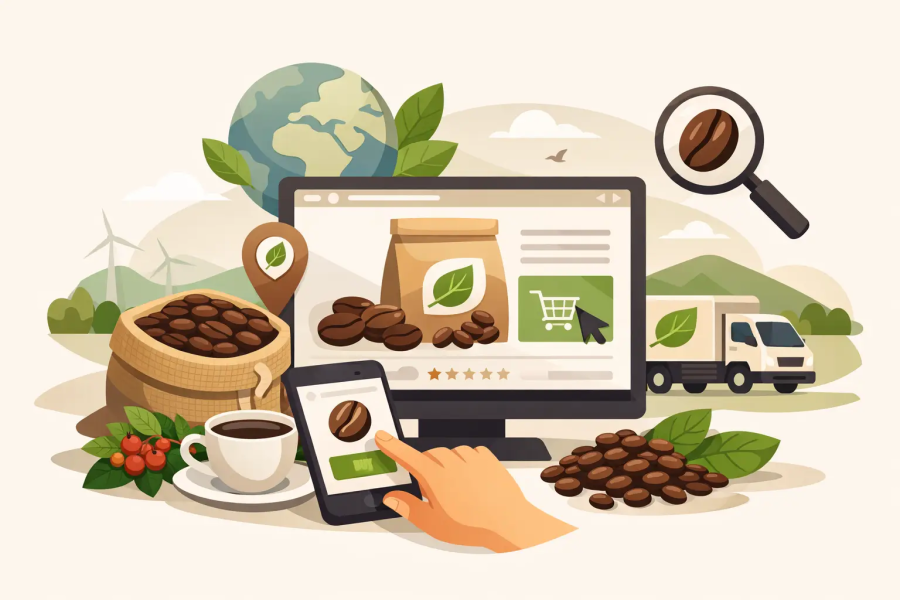
Order organic coffee beans online: This is how you can find freshly roasted varieties with clear origins, fine aromas and the right roasting profile for your cup.
The aroma of freshly ground beans in the morning often sets the tone for the first good moment of the day. Those who want to order organic coffee beans online are therefore usually looking for more than just an organic label; they want coffee with a traceable origin, an authentic taste, and a roast that truly delivers its freshness to the cup. Between tangy, fruity filter coffee, creamy espresso, and robust café crème lies a vast world of possibilities. It's good when the selection doesn't become a puzzle.
Order organic coffee beans online: What matters
Organic coffee stands for cultivation according to defined ecological criteria. Certified cultivation prohibits the use of chemical-synthetic pesticides and readily soluble mineral fertilizers. Instead, healthy soils, shade crops, and more diverse agricultural practices play a crucial role. This can make coffee cultivation more resilient in the long term – provided that cultivation, harvesting, and processing are managed carefully.
Organic certification alone doesn't guarantee good taste. Even a certified organic bean can taste bland if it's been roasted too dark, stored for too long, or processed carelessly. Conversely, a good organic coffee always tells several stories at once: from the altitude, the variety, the harvest, the processing, and the roasting. Only this interplay transforms a bean into a coffee you'll want to brew again and again.
When buying coffee online, it's worth looking beyond the label. Is the country or region of origin mentioned? Are there details about the aroma profile, roast level, and suitable preparation? And is it clear when the coffee is roasted? Such information is more helpful in making a selection than a mere promise of "strong" or "mild."
Freshness is not a secondary matter.
Coffee beans are full of volatile aromas after roasting. Carbon dioxide escapes during the first few days, after which many coffees develop a particularly harmonious flavor. However, with increasing storage time, the bean loses some of its vibrancy. It smells less intense, the crema can become thinner, and subtle notes of chocolate, caramel, or red fruits fade into the background.
Therefore, daily, on-demand roasting offers a real quality advantage. If the beans are packaged quickly after gentle roasting, more of what makes coffee so appealing is preserved: the warm aroma upon opening the package, the crisp sweetness in the first sip, and the lingering finish. It's better to buy as you use it rather than stocking up for six months. For many households, package sizes that can be opened and consumed within four to eight weeks are ideal.
Origin shapes the character in the cup
Those who want to order organic coffee beans online should feel free to search according to their own taste rather than for a supposedly "best" coffee. Highland Arabicas from Africa can have aromas of cherries, citrus, or honey and seem particularly vibrant when brewed through a filter. Coffees from Central and South America often offer a well-rounded sweetness with notes of nut, cocoa, and caramel. Beans from Asia and the Pacific are often fuller-bodied, spicier, and perfectly suited for a strong espresso.
These patterns are guidelines, not rigid rules. Processing methods make a big difference: washed coffees often taste cleaner and more defined, while naturally processed beans can exhibit more fruitiness and a richer sweetness. Those who want to avoid harsh acidity shouldn't categorically rule out all African coffees. Roasting, processing, and brewing are crucial. A medium to dark roast with a chocolatey profile often tastes smooth and balanced, even if the bean comes from a fruit-forward origin.
The perfect organic bean for your preparation
One coffee bean doesn't have to be all things to all people. What tastes of flowers and ripe cherries when brewed with a pour-over filter might taste too light or too thin in a portafilter machine. Conversely, a dark, strong espresso can quickly become overpowering in a filter. Knowing your brewing method makes choosing the right coffee much easier.
For fully automatic coffee machines, medium to dark roasted beans with low acidity and a full body are usually ideal. Aromas of dark chocolate, nougat, milk, or roasted nuts remain pleasant even when the coffee is prepared quickly in the morning. For cappuccino and latte macchiato, the roast can be stronger, as it needs to stand out against the sweetness of the milk. A balanced espresso roast with caramel and cocoa notes is particularly enjoyable in these cases.
A portafilter machine allows for precise coffee preparation. This opens up possibilities for finer nuances, but requires some patience with grind size, dose, and extraction time. Start with a more classic espresso roast if you prefer a dense crema and low acidity. Curious home baristas can then try lighter, more complex coffees and discover how different the sweetness, fruitiness, and texture can be.
Filter coffee and French press brewing reveal their origin particularly clearly. Light to medium roasts can fully develop their clear aromas using these methods. Fuller-bodied varieties are also suitable for French press brewing because the metal filter allows more oils to be extracted into the cup. When using a pour-over filter, it's worth experimenting with water temperature and grind size: If the coffee tastes bitter, grind a little coarser or shorten the brewing time. If it tastes weak or acidic, a finer grind can help.
This will make ordering a good decision.
The aroma of an opened sample tin is missing from the online shop. However, you can make more targeted comparisons if the product descriptions are clearly structured. Pay attention to the bean type, origin, flavor notes, roast level, and brewing instructions. The information about whole beans is also valuable: ground just before brewing, they retain their aroma much better than pre-ground coffee.
If you're not yet entirely sure of your taste, a sampler pack is the most convenient shortcut. It reduces the risk of buying the wrong coffee and quickly helps you become more confident in your palate. Don't try five different coffees in one morning. Prepare two varieties on different days, keeping them as consistent as possible, and briefly note what you notice: creamy or light, nutty or fruity, clean or spicy. After just a few cups, a surprisingly clear picture will emerge.
A "coffee finder" like the one on Vee's website can also help filter out suitable suggestions from many countries of origin. Be honest about how you drink your coffee. If you enjoy it with milk every day, you don't need to start with a particularly floral filter coffee. On the other hand, if you drink it black and love fruity notes, you can venture into more complex roasts.
Decaffeinated and organic: Uncompromising enjoyment
Decaffeinated organic coffee is no longer just a last resort. Good beans retain their sweetness, body, and characteristic aroma even without caffeine. The key is that the initial quality is right and the roasting process doesn't mask the coffee's natural profile. For evenings or for those sensitive to caffeine, it's a wonderful way to maintain the familiar coffee experience.
Here too, the rule is: choose according to preparation method and taste. A decaffeinated espresso can taste of cocoa and caramel and have a beautiful crema. A filter coffee can be smoother, nuttier, or subtly fruity. The organic label complements the conscious choice – but above all, the cup should bring enjoyment.
Storage: To keep the aroma with you
Even the best roast loses its character if left next to the stove, in sunlight, or uncovered in the refrigerator. Store beans in a cool, dry, and dark place, ideally in their tightly sealed aroma-preserving packaging or an airtight container. Once opened, beans prefer one thing above all: rest.
Buy at a rate that suits your household and grind only the amount you need immediately. This way, every order becomes a fresh ritual, not just stockpiling. At Vee's Coffee, select Grand Cru beans are gently roasted by hand daily and packaged while still warm – so that origin and craftsmanship aren't just on the label, but can be felt with every brew.
For your next cup, try choosing a slightly different flavor: more chocolate, more caramel, a touch of cherry, or a particularly smooth cup. The perfect organic coffee doesn't have to be complicated. It should reliably smell wonderful in the morning and taste so good that you look forward to your next sip.