


Ordering coffee beans for the office made easy
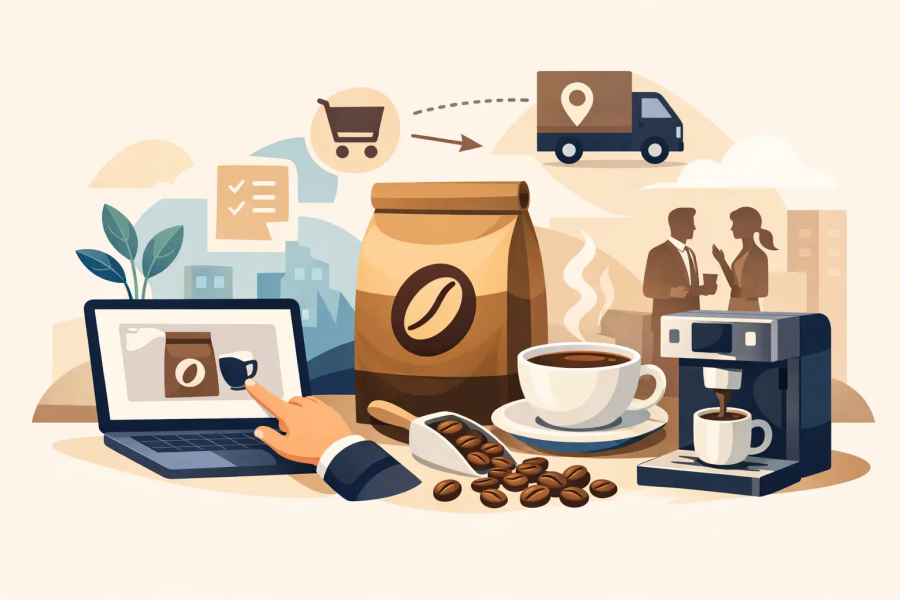
Order freshly roasted coffee beans for the office: Here's how to find quantities, roasts and aromas that teams and guests will enjoy drinking every day.
The first cup of coffee at the office often matters more than you'd think. It accompanies the start of the workday, makes short breaks pleasant, and welcomes guests. Therefore, anyone ordering coffee beans for the office shouldn't simply grab the biggest bag with the cheapest coffee. Freshness, roasting, and taste transform a simple order into a coffee experience you look forward to every morning, such as Vee's Gourmet or Grand Cru roasts.
Why good beans make a difference in the office
Coffee in the office is consumed by many people, often at different times and with very different preferences. One colleague might enjoy a full-bodied café crème with milk, such as Vee's Gourmet Roast, while another prefers a short, strong espresso, like Vee's Espresso Crema Napoli. Then there are meetings, client appointments, and the fully automatic coffee machine, which is expected to deliver a reliable supply every day. And coffee shouldn't be sour; it should also taste good lukewarm or cooled down, like all Vee's coffees.
That's precisely why whole beans are the better base. They retain their aroma longer than ground coffee and only release their fragrance when ground. Freshly roasted beans can smell of dark chocolate, caramel, nuts, honey, or ripe fruit—depending on their origin and roasting profile—and are never overly acidic. This not only tastes better, but also shows appreciation for employees and visitors.
Office coffee doesn't have to be complicated. Above all, it should be balanced, easy to digest, and reliable. Very light, fruity roasts might appeal to individual coffee enthusiasts, but they can be polarizing in a large team. For everyday use, harmonious coffees with low acidity, a pleasant sweetness, and enough body for milk-based drinks (so the coffee aromas don't get lost in the milk) often prove their worth – for example, Vee's Italian Roast d'Oro.
Ordering coffee beans for the office: First, assess your needs.
The right amount prevents two common mistakes: too little coffee at the crucial moment or too much coffee that sits in the cupboard for too long. A practical guideline is about 7 to 10 grams of beans per cup. One kilogram is therefore enough for approximately 100 to 140 cups, depending on the machine, grind size, and desired strength.
For a small office with ten regular coffee drinkers, a monthly requirement of about three to six kilograms is realistic. In an office with high customer traffic, frequent meetings, or a popular fully automatic coffee machine, consumption increases accordingly. It's worthwhile to roughly note your needs for four weeks. After that, you can plan your order quantity with surprising accuracy.
It's better to order at regular, well-planned intervals rather than buying a very large quantity only occasionally. Coffee is a natural product and thrives on freshness. After roasting, it needs some time for the aromas to develop. It then tastes best when consumed quickly and stored properly. A cool, dry place in a sealed bag or an airtight container is ideal.
The roasting process must be suitable for the machine.
Not every coffee bean shows its best side with every machine. Therefore, before ordering, a simple question needs to be asked: How is coffee predominantly prepared in the office?
Fully automatic: balanced and creamy
Fully automatic coffee machines require beans that deliver a satisfying result as both a café crème and an espresso. Medium-bodied to slightly darker roasts are often a reliable choice. They provide body, remain present even with milk, and typically offer pleasant nutty, chocolatey, or caramel notes, such as Vee's Espresso Roma.
If your team includes many cappuccino and latte drinkers, you should choose a coffee that doesn't overpower the milk. A coffee that's too light can quickly taste weak and get lost in the milk. For black coffee, a balanced roast with gentle acidity and a clear sweetness is particularly pleasant, for example, Vee's Espresso Santo Domingo Royal.
Portafilter: Room for character
If there's an espresso machine in the office, the beans can be chosen more individually. A classic espresso with notes of cocoa, roasted nuts, and caramel is a treat for most guests. Those who drink their espresso straight can also offer a more complex specialty with delicate fruit or honey notes, such as Vee's Organic Espresso Crema Napoli.
This, however, requires that the grind size and recipe are regularly adjusted. Good beans alone are no substitute for a clean grinder or careful adjustments. If this time is lacking in the workday, a simple, easy-to-drink espresso is the wiser choice.
Filter coffee machine and hand filter: Clarity in the cup
For filter coffee, single-origin highland coffees and lighter to medium roasts than those from East Africa are often suitable. They can showcase floral, fruity, or sweet nuances particularly clearly, for example, coffees from Kenya, Ethiopia, Yemen, or Tanzania. However, in the office, a coffee that isn't too acidic is recommended. This way, the pot remains appealing to a wide range of palates, and the second cup tastes just as good as the first.
One type or a selection?
Having a single main variety makes purchasing, storing, and maintaining the machine easy. For most offices, this is the best starting point. Choose a versatile coffee that works well as a café crème, harmonizes with milk, and also makes black coffee taste pleasantly smooth, for example, Espresso Roma.
As coffee culture develops, a wider selection becomes desirable. For example, a strong espresso for a fully automatic coffee machine and a decaffeinated coffee are a good option. This way, people who don't want or tolerate a caffeine boost in the afternoon don't have to miss out on great taste. Organic coffee can also be a suitable addition if the company consciously prioritizes sustainable farming practices.
Sample packs are especially helpful when it's not yet clear what the team will really like. Test several different profiles over a few days: a chocolatey-nutty all-rounder, a slightly stronger espresso, and perhaps a milder coffee for filter or café crème. Don't just ask about their favorite coffee, but also how the coffee tastes with milk and whether it's enjoyable in the morning and after lunch.
What you should pay attention to when ordering
When buying coffee, the price per kilogram isn't the only factor. Cheap coffee that tastes bitter, quickly goes stale, or is left untouched by half the team is a bad investment. Instead, pay attention to these four points:
Fresh roasting: Beans roasted fresh daily, on demand , bring a significantly more vibrant aroma to the office kitchen.
Clear flavor descriptions: Descriptions like chocolatey, nutty, caramel, or fruity help to set expectations for the cup.
Suitable packaging sizes: Smaller units keep supplies fresh, while larger bags can be more economical for high consumption.
Reliable delivery: Those ordering for a team need supplies that arrive predictably—especially before events or busy weeks.
Vee's coffee uses Grand Cru beans, which are gently roasted by hand and packaged while still warm. This is ideal for offices that aren't looking for just any pick-me-up, but rather a coffee with aroma, origin, and character.
Minimal care, maximum taste
Even the best coffee beans can lose their quality if the machine and grinder are neglected. Coffee oils accumulate over time and can taste rancid. Therefore, clean the brewing unit, grounds container, milk system, and grinder according to the manufacturer's instructions. The milk system, in particular, deserves daily attention.
Also check the grind setting. If the coffee runs through too quickly, it often tastes weak and acidic. If it runs through too slowly, it can become bitter. A good office coffee should be strong, but not harsh. Even a small adjustment to the grinder can noticeably change the taste of the cup.
For those ordering coffee beans for the office, choosing a fresh, balanced roast and a realistic ordering schedule is the most important decision. This way, breaks become more than just a casual trip to the machine; they transform them into a brief moment filled with the aroma of freshly ground coffee – and perhaps the perfect conversation starter for a good workday.