


Roasting levels of coffee beans explained
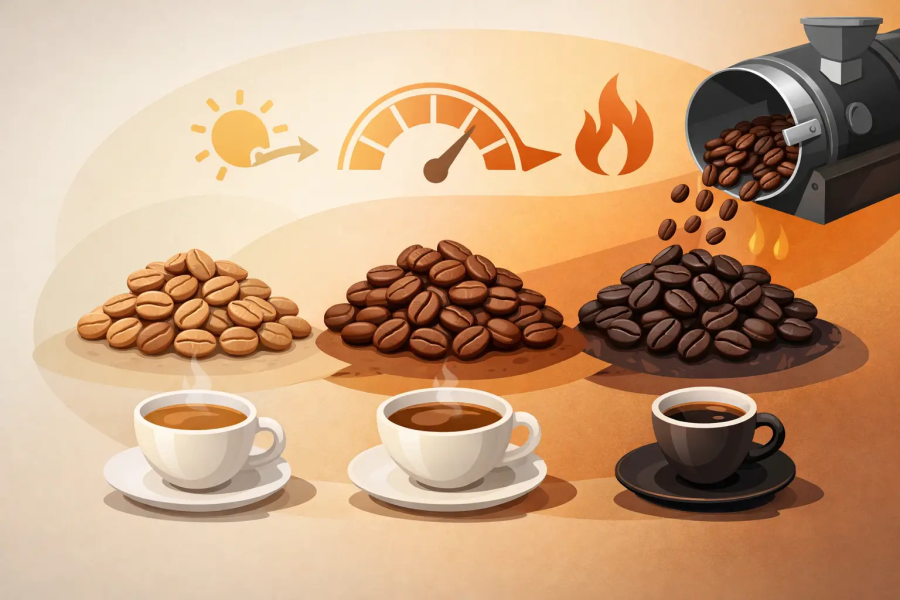
Roasting levels of coffee beans explained: This is how you can recognize light, medium and dark roasts and find the coffee that is ideal for your preparation.
Having the roast levels of coffee beans explained to you noticeably changes the way you buy coffee: Suddenly, not only the origin but also the color of the bean tells you whether cherry and honey, caramel and nut, or dark chocolate awaits you in your cup. Someone who loves a crisp filter coffee in the morning is looking for something different than someone who enjoys a rich espresso from a portafilter machine. The roast level helps you recognize precisely this difference before the first sip.
The good news: You don't need to be a master roaster to find the perfect bean. A glance at the roast color, aroma profile, and brewing method will reliably guide you. However, a second look is worthwhile, because light, medium, and dark aren't rigid quality levels. They represent different ways to get the best out of a coffee bean.
What the roast level does to the bean
Green coffee beans initially smell more like hay than coffee. It's only in the roasting drum that the aromas we love develop: notes of roasted nuts, cocoa, caramel, bread crust, or ripe fruit. Under controlled heat, the bean loses moisture, increases in volume, and changes color from green to cinnamon brown to a deep dark brown.
Many reactions occur simultaneously during roasting. Sugars and amino acids form new flavor compounds, acids change, and the bean's natural structure becomes more porous. The longer and deeper the roasting process, the more pronounced the roast's character becomes. In a light roast, the origin is often particularly evident. A darker roast, on the other hand, brings more roasted aromas, body, and a robust texture.
What's crucial isn't just the duration, but the entire roasting curve: How quickly is the bean heated? How gently does it develop after the first audible crack, the so-called first crack? Gentle hand-roasting gives the coffee time. This allows complex aromas to develop fully, instead of a dark outer layer forming while the interior of the bean remains underdeveloped.
Roasting levels of coffee beans explained: light to dark
Light roast: Origin takes center stage.
Light roasts are usually light brown, dry, and show little to no oily sheen on the surface. They retain many characteristics of their growing region. An Ethiopian highland coffee might smell of bergamot, jasmine, and cherries, while a Kenyan coffee might be reminiscent of blackcurrant. Delicate notes of honey or tea may also be present.
This vibrancy is often described as "acidic." Ideally, however, this doesn't refer to an unpleasant acidity, but rather a fresh, fruity structure—similar to ripe fruit. Whether or not you like it depends heavily on the bean, the brewing method, and your personal taste. If you're only familiar with very dark roast coffee, you should definitely try a light roast, perhaps starting with a well-balanced filter coffee.
Light roasts are particularly well-suited to hand filters, Chemex, Aeropress, or a well-adjusted drip coffee maker. Their subtle nuances can be brought out with a slightly coarser grind and water that is not boiling. They can also be interesting for classic espresso, but require precise grinding and careful extraction.
Medium roast: Balance in the cup
For many coffee lovers, a medium roast is the perfect balance of enjoyment. It combines recognizable origin notes with more sweetness, body, and gentle roasted aromas. In the cup, you'll often find hints of caramel, milk chocolate, almond, nougat, or ripe fruit. The acidity is usually more rounded than in a light roast, without the coffee losing any of its vibrancy.
This makes medium roasts pleasantly versatile. They work just as well in fully automatic machines as in a French press or pour-over. They also often deliver a harmonious result as espresso, especially if you're looking for a smooth, balanced shot without excessive bitterness.
For everyday use, this roast is often a safe choice, but by no means a compromise. High-quality Grand Cru beans, in particular , demonstrate just how multifaceted balance can be. A coffee can taste of dark chocolate and still possess a delicate cherry sweetness. It is precisely this interplay that makes the cup so interesting.
Dark roast: Strength, creaminess and roasted aromas
Dark roasts range in color from dark brown to almost black. Depending on the degree of roast and age, their surface may have a slight sheen as oils rise to the surface. The flavor profile is dominated by robust notes: dark chocolate, cocoa, roasted nuts, caramel, and sometimes spicy or smoky nuances. The body is fuller, and the acidity is usually more restrained.
This is the classic range for many espresso roasts. Under pressure in the portafilter, a dense texture and a beautiful crema are created. Even with fully automatic machines, lovers of strong coffee benefit from darker roasts, especially in milk-based drinks. Cappuccino and latte macchiato require a coffee that remains noticeable alongside the milk.
Dark roast doesn't automatically mean better for espresso, and very dark roast doesn't automatically mean particularly high quality. If roasted too dark, subtle origin notes can be lost. The coffee then tastes predominantly bitter, ashy, or burnt. A good dark roast, despite its intensity, remains clear and pleasant: it tastes of cocoa and roasted aromas, not burnt toast.
Why color alone is not enough
Color provides an initial clue, but it doesn't tell the whole story. Different beans will roast to different degrees of darkness even with the same temperature because they vary in size, density, and sugar content. A dense, highland coffee reacts differently to heat than a softer bean from lower altitudes.
Terms like "City Roast," "Full City," or "Italian Roast" aren't uniformly defined everywhere. Therefore, don't rely solely on such names. More helpful are specific details about the flavor, recommended preparation, and origin. If the packaging mentions milk chocolate, nuts, and caramel, you can usually expect a different experience than if it lists notes of citrus, berry, and blossom.
Freshness also plays a major role. Immediately after roasting, beans release carbon dioxide and continue to develop their aroma. Very freshly roasted coffee needs a few days to rest before it reaches its full potential. After that, airtight packaging, a cool, dark cupboard, and grinding only as needed preserve the delicate aromas much better than an open glass next to the stove.
Choose the right roast level for your preparation
If you primarily drink filter coffee, start with light to medium roasts. They bring clarity to the cup and allow you to experience the origin of the bean. For French press, a fuller roast is preferable: A medium roast with chocolate or nutty notes tastes particularly well-rounded.
Your personal style will determine which fully automatic coffee machine is right for you. If you prefer a smooth café crema with low acidity, medium to dark roasts are often a good choice. If you drink a lot of cappuccino, an espresso roast with cocoa and caramel notes might be better. However, with very oily beans, pay attention to the maintenance of your grinder – regular cleaning ensures more precise operation and a longer lifespan.
Medium to dark espresso roasts are a good starting point for portafilter machines. A lighter espresso can be wonderfully sweet and fruity, but requires more patience when dialing in the perfect roast. Darker beans are often easier to extract, but can quickly become bitter if the grind is too fine or the extraction time is too long. Try only one change per shot: first the grind, then the dose or the extraction time. This is how you truly get to know your beans.
The darkest coffee is not necessarily the mildest.
A common misconception is that dark roasts are inherently easier on the stomach or contain less caffeine. Neither is so simple. A darker roast often seems less acidic because its fruity acids are less pronounced. However, whether a coffee is well-tolerated also depends on the variety, processing, dosage, preparation, and your own sensitivity.
When it comes to caffeine, the type of bean is more important than the roast level. Arabica and Robusta beans differ more significantly in caffeine content than a light and a dark roast of the same bean. Those looking to reduce their caffeine intake are better off with a carefully decaffeinated coffee than with a particularly dark roast.
Here's how to find your personal favorite
Roasting aromas aren't a ranking, but an invitation to comparison. Don't order a large supply right away if you want to try a new style. A sampler pack or smaller quantities make it easy to taste two roasts back-to-back. Prepare them as similarly as possible and pay attention to three questions: What does the coffee smell like? How does it feel in the mouth? What impression lingers after swallowing?
At Vee's Coffee, the beans are freshly and gently roasted by hand every day. This creates the best conditions for not just reading the differences, but clearly tasting them in the cup. Perhaps a chocolatey espresso roast will become your morning ritual. Perhaps a light highland coffee will surprise you with its sweetness and aroma of ripe cherries.
Your ideal roast level doesn't have to please anyone but you. Take your time to enjoy two or three cups for direct comparison – and follow the aroma you're already looking forward to when you open the package.