


Selecting coffee beans for your fully automatic coffee machine
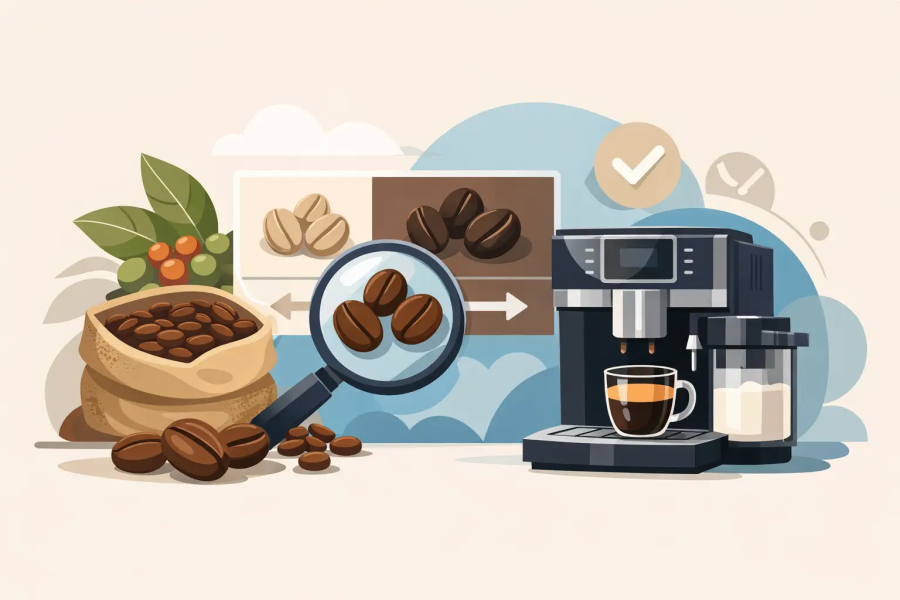
Selecting coffee beans for your fully automatic coffee machine: Find fresh, gently roasted beans with balanced acidity and full aroma for every good day at home.
The first coffee of the day should smell like coffee, not like a bitter aftertaste or burnt grinder. When choosing coffee beans for your fully automatic machine, origin and taste aren't the only factors: roast level, bean surface, and freshness also determine what ends up in your cup. The fully automatic machine works quickly, reliably, and at the touch of a button – with the right beans, it becomes a coffee you look forward to every morning.
Choosing coffee beans for a fully automatic coffee machine: What matters
A fully automatic coffee machine grinds, doses, tamps, and brews in a single, streamlined process. This makes it convenient, but also demanding when it comes to bean selection. Very dark-roasted, highly glossy beans, for example, can have a lot of oil on their surface. Over time, this oil settles in the bean hopper and grinder. This isn't a flaw in itself—strong espresso roasts, in particular, are allowed to contain aromatic oils—but consistently very oily beans increase the maintenance required.
It's worth taking a look at the packaging. Freshly roasted coffee already smells wonderful, but it needs some time to rest after roasting so that excess carbon dioxide can escape. For fully automatic coffee machines, coffee is often particularly well-balanced if it's opened after a few days of steeping. It's better to buy quantities that you can enjoy within a few weeks, rather than letting a large supply sit in the cupboard for months. Aroma isn't a promise for later, but a pleasure for now.
The roast level determines the character and crema.
Many people look for low-acid beans for their fully automatic coffee machines. This usually stems from a desire for a well-rounded, palatable coffee that isn't sharp or lemony. The roast level can help guide you in this regard.
A medium roast often offers a beautiful balance. It combines the characteristics of its origin – such as honey, almond, cherry, or cocoa – with enough body for a café crème or latte. Those who drink black coffee and appreciate subtle nuances will often find their favorite coffee here.
Medium to dark roasts generally taste stronger, fuller, and less acidic. They pair excellently with espresso, cappuccino, and latte macchiato because they hold their own against milk. Notes of dark chocolate, malt, and caramel then harmonize particularly well. Very light roasts, on the other hand, are often fruitier and more vibrant. This can be fantastic, but requires a bit of finesse with grind size, temperature, and beverage volume when using a fully automatic coffee machine.
Arabica, Robusta, or a good blend?
Arabica beans are considered particularly aromatic and complex. Highland coffees from Africa, Arabia, or Latin America can exhibit floral, nutty, chocolatey, or fruity notes. A high-quality Arabica is often an excellent choice for a mild café crème or an elegant black coffee.
Robusta brings more strength, a denser body, and often a stable, hazelnut-colored crema. In a carefully composed blend, it complements Arabica excellently, especially for espresso and milk-based drinks, provided the Robusta content does not exceed 10%. Those seeking a distinctive coffee in the morning or who prefer their cappuccino not too mild should give an Arabica blend with a maximum of 10% Robusta a try. Higher Robusta percentages overpower the delicate Arabica aromas. 100% Arabica is a marketing slogan and does not produce a stable crema.
Single-origin coffees and blends are therefore not a question of better or worse. A single-origin coffee clearly reveals its origin. A blend, on the other hand, can be specifically tailored for balance, crema, and everyday usability. Especially in fully automatic machines, which often prepare several drinks, a balanced espresso blend is a reliable all-rounder. Vee's coffees generally contain a blend of approximately 5% Robusta.
Taste first: Which bean goes best with your favorite drink?
If you primarily drink café crème or black coffee, look for a medium roast with a medium body and a gentle, well-integrated acidity. Descriptions like nutty, caramel, milk chocolate, or honey usually indicate a well-rounded character. If you enjoy variety, a subtle fruity note is also acceptable—however, it shouldn't overpower the coffee.
For espresso, a concentrated, full-bodied coffee is recommended. Dark chocolate, cocoa, roasted hazelnut, and caramel are classic flavor profiles. When making espresso from a fully automatic machine, a smaller volume of water is crucial: too much water reduces its body and can accentuate bitterness.
Cappuccino and latte macchiato fans can opt for a stronger brew. Milk adds natural sweetness but also mellows delicate aromas. A full-bodied coffee with a chocolatey-spicy profile remains pronounced and still tastes like coffee in the last sip.
There's no need to sacrifice flavor for a caffeine-reduced coffee. A high-quality decaffeinated coffee can be nutty, smooth, and aromatic, making it perfect for an afternoon coffee or a second cappuccino. Organic coffees are also a great choice for those who value certified organic farming practices as well as great taste.
Not just the bean: Settings on the fully automatic coffee machine
Even the best beans only reveal their full potential with the right settings. If the coffee tastes weak and flat, grind finer or reduce the amount of water. If it becomes bitter, dry, or unpleasantly astringent, a coarser grind can help. Always change only one setting at a time and then brew two or three cups. The grinder needs a little time for the new setting to fully translate into the final result.
Coffee strength also deserves attention. A high strength with very dark beans can quickly become too much. When trying a new variety, it's best to start with a medium setting. This way, you can get a feel for its character before adjusting it to your personal taste.
Cleanliness is not a secondary consideration. Coffee oils contribute to the aroma, but in old residue, they quickly become unpleasantly rancid. Empty and wipe the bean hopper regularly, clean the brewing unit and grounds container according to the manufacturer's instructions, and perform the recommended maintenance programs. A well-maintained fully automatic coffee machine not only tastes better—it also operates reliably for longer.
Trying is smarter than making a blind decision.
Tasting descriptions provide guidance, but they don't replace your own first sip. Water hardness, machine, grind size, and drinking habits noticeably influence the taste. A sampler pack is therefore often the most pleasant way to find your favorite coffee: Compare two to four roasts over several days, ideally using the same settings each time.
Don't just note "tastes good" or "doesn't taste good." Ask yourself: Is the coffee too strong or too mild? Do I like the sweetness? Is it better black or with milk? Do I miss the crema, or would I prefer more fruitiness? These simple observations will make your choice much clearer than any lengthy technical description.
At Vee's Coffee, Grand Cru beans are freshly and gently roasted by hand every day. This creates the basis for an honest comparison: you not only get to know different countries of origin, but also which roast suits your fully automatic coffee machine and your daily routine.
The best bean doesn't have to be a compromise for all drinks. Perhaps a smooth, chocolatey blend is in the hopper in the morning, and a single-origin highland coffee is ready on the weekend. Give your taste buds free rein – the next aroma from the automatic machine could be exactly your coffee.