


Which coffee beans are right for me? Here’s how to find them
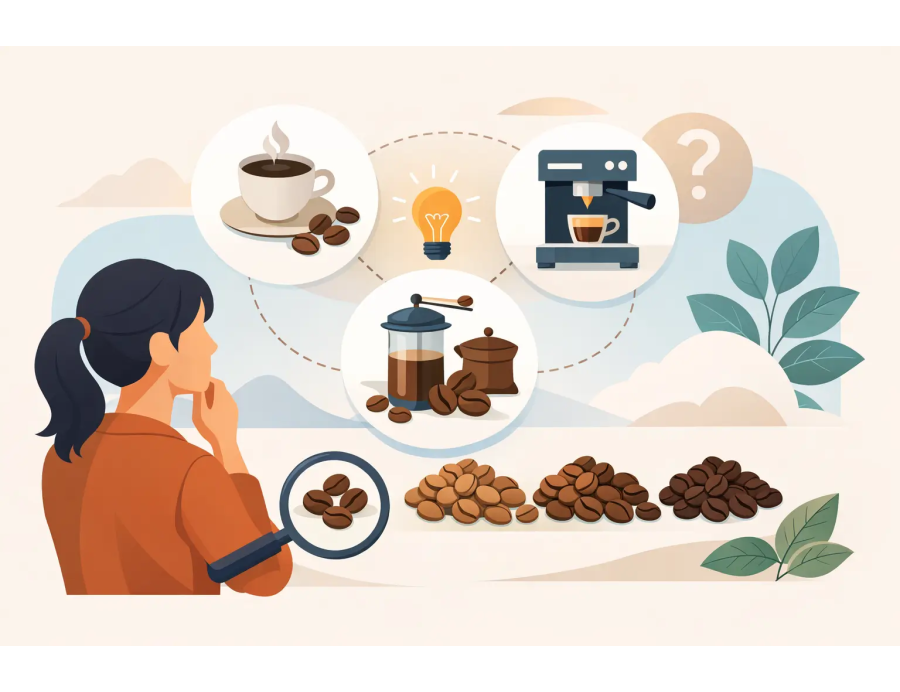
Which coffee beans are right for me? Discover the flavour, roast and brewing method that suit your taste – freshly roasted for even more enjoyment at home.
That first sip in the morning shouldn't be a matter of chance. Perhaps you crave a smooth coffee with notes of milk chocolate and caramel. Or maybe you prefer a strong, rich, and lingering espresso. The question "Which coffee beans are right for me?" can't be answered with a single variety. It starts with your personal taste, your brewing method, and the occasion for which you're drinking coffee.
The good news: You don't need to be a coffee taster to find your favorite. Knowing whether you prefer chocolatey, nutty, fruity, or spicy flavors will already put you on the right track. Freshly and gently hand-roasted beans make these differences particularly noticeable – both in the cup and in the aroma that fills the kitchen while grinding.
Which coffee beans are right for me? Taste will show you the way.
Don't start with complicated technical terms, but with an honest question: How do you want your coffee to taste? Many people look for a full-bodied, harmonious coffee without any harsh acidity. Others prefer a vibrant freshness reminiscent of cherries, citrus fruits, or berries. Both are perfectly valid – they're simply different taste preferences.
If you prefer a well-rounded, familiar flavor, beans with notes of dark chocolate, cocoa, nut, caramel, or honey are often an excellent choice. They are smooth, sweet, and exceptionally balanced. Such profiles are perfect for breakfast coffee, cappuccino, and for anyone who enjoys their coffee several times a day without it becoming too demanding.
Do you prefer your coffee black and want to discover more in your cup? Then try something fruitier. Highland coffees from certain growing regions in Africa can have aromas of ripe berries, cherries, tea, or delicate blossoms. These aromas are not artificially added. They arise from the origin, variety, processing, and careful roasting. Fruity coffees often seem lighter and more vibrant – it's best to enjoy them without milk first, so their subtle nuances aren't lost.
Strong, spicy, or earthy notes are also a matter of personal taste. They often appeal to people who like a full-bodied coffee that can hold its own even with milk. The key is balance: strong doesn't have to mean bitter. A high-quality, gentle roast can bring out depth and intensity without making the coffee taste unpleasantly harsh or burnt.
Not all acids are created equal.
The word "acid" often unsettles coffee drinkers. However, acidity is actually a natural part of flavor – comparable to the freshness of an apple. A subtle, well-integrated acidity can make coffee vibrant. It's usually perceived as unpleasant when it's very sharp or when the coffee is generally unbalanced.
If you prefer a low-acid coffee, opt for chocolatey, nutty, and slightly darker roasted beans. Brewing with a fully automatic machine, portafilter, or stovetop espresso maker can also enhance the impression of a fuller, less light-colored coffee. If you're curious about fruity specialties, start with a mild fruit flavor rather than a very light, highly complex coffee.
Origin reveals a lot, but it doesn't decide everything.
Origin is a helpful guide, not a rigid judgment. Coffee from Latin America is often associated with notes of nuts, cocoa, caramel, and a balanced sweetness. Many of these coffees are uncomplicated all-rounders: pleasant as a café crème, convincing in filter coffee, and reliable in milk-based drinks.
Coffees from Africa often exhibit more floral or fruity notes. They can smell of cherries, berries, or citrus and are particularly suitable for those who want to consciously savor their coffee. Coffees from Asia and the Pacific region often have full-bodied, spicy, or earthy profiles that can display a great deal of character in strong blends and as espresso.
But origin is only the beginning. Altitude, harvest, processing, and roasting profile significantly influence the flavor. A single-origin Grand Cru coffee expresses the character of its origin particularly clearly. A carefully composed blend, on the other hand, can deliver precisely the harmony you seek in your daily espresso. Single-origin isn't automatically better—it's often more exciting and individual. Blends are no less high-quality—they are deliberately developed for balance.
Arabica or Robusta: Which suits your cup?
Arabica beans are often known for their complex aromas, delicate sweetness, and elegant fruitiness. They are a good choice for filter coffee, café crème, and espresso if you want to discover nuances like chocolate, honey, or cherry. High-quality Arabica can be very mild, but also surprisingly intense.
Robusta beans typically contribute more body, a denser crema, and a higher caffeine content. When added in moderation (5 to a maximum of 10%) to a good espresso blend, it can lend structure and spice to the drink—especially when you drink espresso with milk. A pure Arabica espresso doesn't develop a stable crema; a small amount of Robusta can make it stronger and creamier.
The preparation method determines the appropriate roast.
The same coffee bean can taste surprisingly different depending on the brewing method used. Therefore, your brewing technique is an essential part of determining which coffee beans suit you best.
For fully automatic coffee machines, well-balanced beans with a medium to dark roast are usually a safe choice. They provide body, sweetness, and low bitterness, even when the coffee is prepared quickly and automatically. Very light roasts, on the other hand, can be too acidic in a fully automatic machine, especially if the grind is too coarse or the brewing time is too short.
Espresso beans can truly shine in a portafilter machine . Roasts with notes of dark chocolate, caramel, and roasted nuts are an excellent choice. For cappuccino and latte macchiato, the coffee needs sufficient presence so that the milk doesn't overpower its aromas. Those who drink espresso straight can also experiment with finer, fruitier roasts—provided the grinder is precisely calibrated.
Filter coffee, pour-over, and French press coffees reveal more of a bean's unique character. Medium roasts allow sweet, floral, and fruity notes to shine through. The French press, with its metal filter, tends to emphasize body and oils, while a paper filter produces a cleaner, lighter flavor. For espresso pots, full-bodied, not-too-light beans are often a good choice, as this brewing method extracts a strong brew.
Freshness is not a detail, but part of the aroma.
Even the best origin and roast can be disappointing if the beans are stored for a long time. Coffee gradually loses its aroma and aromatic depth after roasting. Freshly roasted beans have an intense fragrance when you open the package and develop precisely those notes when ground that you want to experience later in your cup.
It's best to buy a quantity that you can enjoy within a few weeks. Store the beans in a dry, cool place in an airtight container. And grind them as close to brewing time as possible. A good grinder is often the simplest step to noticeably better coffee because it ensures that aromas are extracted evenly.
Find instead of guess: How to try things out effectively
A sampler pack is ideal if you want to refine your taste. Don't choose five almost identical coffees, but consciously compare different styles: a chocolatey-nutty all-rounder, a strong espresso, a fruitier highland coffee, and perhaps a blend with Robusta.
Prepare the beans in the same way whenever possible. After the first sip, note down just three things: Does the coffee taste too bitter, too acidic, or just right? Do you like the aroma? Would you want a second cup? This will quickly create a personal taste profile that is more helpful than any general ranking.
Vee's Coffee's coffee finder helps translate preferences for taste, preparation, and intensity into a suitable selection. This is especially useful if you're switching from supermarket coffee to freshly roasted beans or looking for a gift that truly suits the recipient.
Your favorite coffee doesn't have to be the same every day. A mild, caramel-flavored café crème might be just right in the morning, while a fruity filter coffee on the weekend might make you crave something new. Give your nose and your taste buds time – then the search for beans will become a delightful little journey of discovery.