


Which espresso beans should you buy for a portafilter?
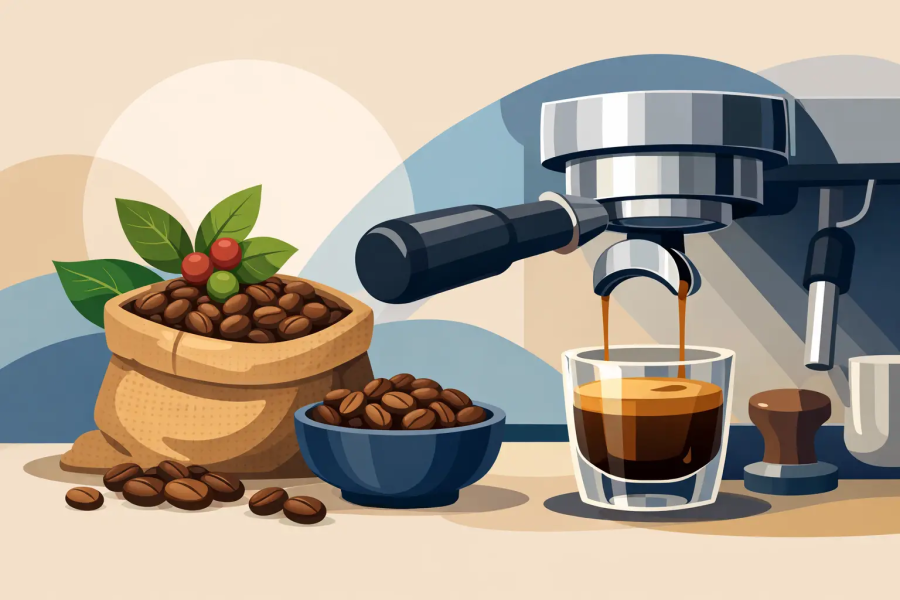
Buying espresso beans for portafilter machines: Here's how to find fresh roasts with the right profile for crema, milk drinks and pure enjoyment at home, every day.
Anyone looking to buy espresso beans for a portafilter machine shouldn't just pick a strong roast. The cup is where it's decided whether dark chocolate, caramel, and a rich crema emerge—or whether the espresso tastes thin, bitter, or surprisingly harsh. The machine is important, but fresh beans, roasted correctly and ground cleanly, are its most crucial ingredient.
A good espresso should be intense without overwhelming the taste buds. It can be nutty and full-bodied, have fruity cherry notes, or be reminiscent of honey. The crucial factor isn't which bean is generally considered the best, but rather which roast suits your taste, your machine, and your daily routine.
Buying espresso beans for portafilter machines: Freshness first
Coffee isn't simply finished after roasting. The beans initially release carbon dioxide, further developing their aroma. For espresso, they need a short resting period, but not months of storage. Very freshly roasted beans can still extract unevenly during the first few days. After about 7 to 14 days, many espresso roasts are perfectly balanced—and, with proper storage, remain aromatic for weeks.
Therefore, pay less attention to a long "best before" date and more to a transparent roasting date. Buy whole beans in a quantity that you will consume within four to six weeks. For a one- or two-person household, smaller packages are often a better choice than the supposedly cheaper bulk purchase. After all, an espresso thrives on the aroma that rises during grinding – not on a cupboard full of beans.
At Vee's Coffee, Grand Cru beans are roasted daily, gently by hand, and packaged while still warm, according to demand. This is not an end in itself: freshness preserves the subtle notes that distinguish a truly excellent brew from merely a strong coffee.
Whole beans are mandatory for the portafilter machine.
Ground coffee loses its aroma quickly because a large surface area is exposed to air. For espresso machines, it's best to grind immediately before brewing. A grinder that produces a consistent grind often makes more of a difference than an expensive machine upgrade.
The grind must be fine enough so the water doesn't rush through, but not so fine that the extraction process almost stops. Only change one setting at a time: either the grind, the amount of coffee, or the extraction time. This way you'll quickly understand what your beans need at any given moment.
The roasting profile determines the character in the cup.
Espresso is often roasted darker than filter coffee. This reduces acidity and light fruit notes, while roasted aromas, body, and sweetness become more prominent. However, this doesn't automatically mean that light roasts are better. Dark roasts develop additional aromas and more richness. For everyday use, medium to dark espresso roasts are often the better choice. They offer a reliable balance of dense texture, crema, and notes like cocoa, roasted nuts, or caramel.
Not all acids are created equal.
Many people specifically seek coffee without unpleasant acidity. This is understandable, as an underextracted espresso can taste unpleasantly sour. At the same time, a delicate, ripe freshness is part of the flavor profile of high-quality Arabica beans. It is more reminiscent of cherry, berry, or juicy fruit than lemon juice.
If you prefer a particularly mild, well-rounded espresso, choose a stronger roast with chocolate, nut, or caramel notes. However, a longer brewing time or too low a brewing temperature can also increase acidity. Therefore, not every sharp cup is a sign of the wrong beans.
Arabica, Robusta or blend.
Arabica is often associated with complex aromas, elegant sweetness, and delicate acidity. Highland coffees from Latin America, Africa, or Asia can taste surprisingly different in espresso: sometimes of milk chocolate and hazelnut, sometimes of dark fruits, spices, or honey. Single-origin Arabicas are ideal if you want to consciously taste the origin of the coffee.
Robusta usually contributes more body, a particularly stable crema, and a stronger, earthier character. In a good espresso blend, it's not a flaw, but rather the very ingredient that gives cappuccinos and lattes more presence. Those who love a rich, classic espresso with plenty of crema in the morning will often find a reliable favorite in an Arabica-Robusta blend. The Robusta content should not exceed 5-10%, otherwise the Arabica aromas will be masked and, in the case of a cappuccino, "lost" in the milk.
So it depends on what you want to happen in your cup. For straight espresso and curious tastings, a single-origin coffee offers exciting nuances. For milk-based drinks, the roast can be fuller, sweeter, and more assertive. Milk softens delicate floral or fruity notes, but beautifully highlights cocoa, nougat, and caramel.
Read about the origin, better understand the taste
Origin doesn't dictate a rigid flavor profile, but it does provide a good indication. Brazilian coffees often produce nutty, chocolatey, and harmonious cups. Colombian beans can combine caramel sweetness with ripe fruit. Ethiopian coffees, depending on the processing method, can be floral, berry-like, or tea-like—for some, an exciting espresso, for others more of a treat for special occasions.
The processing method also influences the cup. Washed coffees often taste clearer and more structured. Naturally processed beans can offer more fruitiness, sweetness, and a velvety richness. You don't need to memorize these terms for your first purchase. Specific flavor descriptions are more helpful: dark chocolate, marzipan, cherry, or roasted almond tell you more about your potential enjoyment than a country of origin alone.
Here's how to buy the right quantity and store it correctly.
Leave the beans in their airtight packaging until the opened package is empty. Then store them in a dark, dry place at room temperature – ideally in the tightly sealed original packaging or a lightproof container. Refrigeration is usually not a good idea: moisture and foreign odors can impair the aroma.
Don't buy coffee in bulk just because you like a particular variety. Coffee changes over time, and your taste should too. A sampler pack is a good idea if you're torn between mild Arabica, a classic blend, and a fruitier espresso. While tasting, jot down what you liked: more body, less acidity, darker chocolate notes, or a richer crema. Your next purchase will be much easier.
The bean needs a suitable espresso recipe.
Even excellent beans can disappoint if the extraction isn't right. As a practical starting point for everyday use, 18 grams of ground coffee is suitable for a double espresso with an extraction time of 25 to 30 seconds. This isn't a hard and fast rule, but rather a starting point to suit your taste.
If your espresso tastes sour, weak, or watery, grind a little finer or gently extend the extraction time. If it's very bitter, dry, or heavy, a coarser grind can help. Also, make sure the coffee is evenly distributed and tamped. Otherwise, the water will find its way through the coffee bed, extracting too much water in some areas and barely in others.
A good bean doesn't just show you what it's capable of with the first perfect shot. Give it two or three shots. When the aroma, crema, and taste come together, you know your espresso. And then, your morning can certainly smell a little like dark chocolate.