


Espresso Blend versus Single Origin: A Comparison
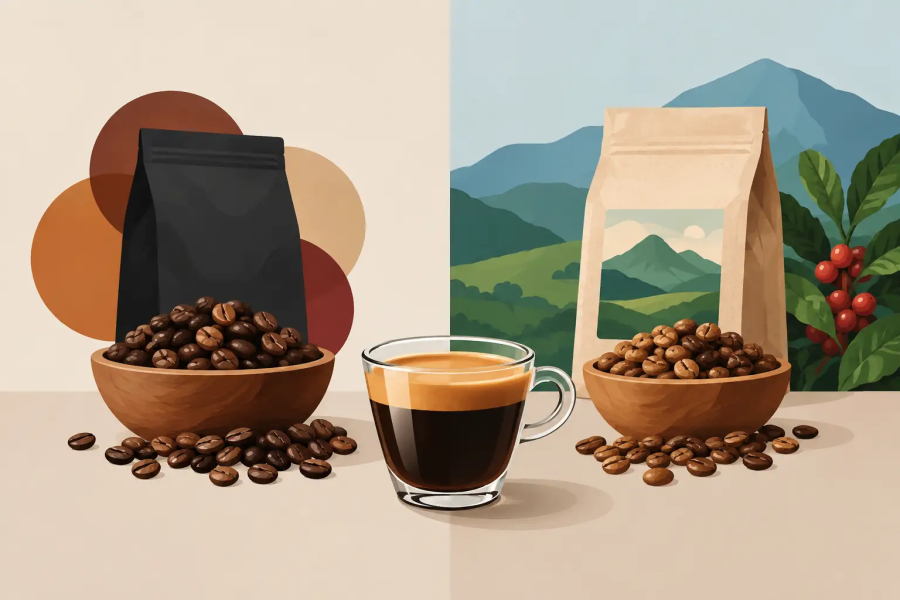
Espresso Blend versus Single Origin: Find out which beans really suit your taste, your machine and your favourite espresso at home.
The first shot of espresso in the morning often decides faster than any theory: does the kitchen smell of dark chocolate and caramel, or does a clear note of cherry, honey, and ripe fruit rise from the cup? Espresso blend versus single origin isn't about right or wrong. It's about the flavor profile you want to enjoy every day, how you prepare your espresso, and how much you're open to discovery.
A blend, a mixture, can taste wonderfully familiar. A single-origin coffee can reveal with surprising precision what a particular growing region has to offer. Both deserve careful roasting, fresh beans, and a little attention at the grinder. But even coffee farmers often blend beans from different varieties to achieve a perfect balance of aroma, body, and acidity.
Espresso Blend versus Single Origin: The Difference
An espresso blend is a carefully composed mixture of at least two coffees. At Vee's, we typically blend three aromatic coffees with one or two coffees for body and add 5% washed Robusta for a stable crema. Generally, a roastery combines beans of different origins, varieties, or processing methods to create a harmonious whole. Often, one coffee contributes a full body, another sweetness, yet another a subtle spiciness, or a dense crema. The goal is a reliable, balanced espresso with a recognizable character, such as Vee's Italian Roast d'Oro or Vee's Espresso Crema Napoli.
Single origin, on the other hand, means that the beans come from a clearly defined source. Depending on the specification, this could be a country, a region, a farm, or even a single lot. Single-origin coffees don't downplay their origin. They reveal how altitude, soil, climate, harvesting, and processing shape the flavor.
The key is to make a subtle distinction: Single origin doesn't automatically mean better, fruitier, or lighter roasted. A single-origin highland coffee can be just as full-bodied, nutty, and chocolatey. Conversely, a blend is by no means a compromise. If it's skillfully composed and gently roasted, the result is an espresso whose balance often can't be achieved with a single bean. Only a green coffee with perfect aroma, body, and acidity is suitable for a single origin, such as Vee's Guatemala, Vee's Kenya, or Vee's Papua New Guinea.
What a good espresso blend brings to the cup
A blend is the first choice for many espresso lovers because it's designed for harmony. It can combine strong cocoa notes, roasted nuts, caramel, and a soft sweetness. This characteristic is particularly evident with milk: in a cappuccino or flat white, the coffee remains present without overpowering the milk with sharp acidity.
The blend also allows the roastery to compensate for differences between harvests. Coffee is a natural product. Rain, sun, and harvest time influence each season. With a carefully balanced blend, the desired profile is maintained through extensive experience, even if one component is slightly different. Those who expect a familiar espresso in the morning benefit from this consistency, which is something we at Vee's place particular emphasis on.
However, this doesn't make blends boring. A successful blend possesses depth and complexity. Perhaps dark chocolate comes first, then hazelnut, and finally a hint of spice or dried fruit. Especially with portafilter machines, fully automatic machines, and Bialetti pots, balanced espresso roasts are often more forgiving of minor variations in grind size or brewing time than very lively, light single origins.
Who is a blend suitable for?
An espresso blend is a good choice for those seeking a smooth, creamy, and relatively low-acid espresso. It's a strong option for milk-based drinks, for households with diverse preferences, and for anyone who doesn't want to adjust the settings with every pack. A well-balanced blend is also often a reliable choice in the office: approachable, aromatic, and convincing in a variety of preparations.
What makes single origin espresso so exciting
A single origin coffee offers you a direct encounter with a specific flavor profile. A coffee from Brazil, for example, might evoke notes of cocoa, almond, and caramel. An Ethiopian coffee might exhibit floral notes, berry, or ripe citrus. Beans from Central America, depending on the region, often combine a delicate sweetness with nutty, stone fruit, or honey flavors. These are not artificially added aromas, but rather sensory impressions naturally inherent in coffee.
As an espresso, this clarity is particularly intense. The small cup concentrates sweetness, texture, and acidity. This is precisely what makes single-origin coffees so appealing to curious connoisseurs and home baristas. With a single origin, you can learn how strongly origin is expressed in the flavor – and how small changes to the grinder or temperature can bring out a different facet.
This precision, however, requires a bit more attention. A fruity coffee can quickly become acidic and unbalanced if the temperature is too high or the brewing time is too long. If the grind is too coarse, it may lack body; if it's too fine, bitterness and dryness can dominate. This isn't a drawback, but rather part of the fun if you enjoy experimenting.
Not all acids are created equal.
Many coffee drinkers say they don't like acidity, but often they mean an unpleasantly underextracted or too pale espresso. Good acidity can be juicy, clear, and sweet—more like biting into a ripe cherry than lemon juice. Nevertheless, those who prefer a smooth, classic espresso don't need to force themselves to try fruity profiles.
When choosing single origin coffees, start with flavor profiles featuring chocolate, nuts, caramel, honey, or dried fruit. These coffees offer a strong sense of place but often remain pleasantly approachable. Very light, floral, or distinctly berry profiles are wonderful if you're looking for precisely this vibrant side to your espresso.
The right choice for your preparation
The brewing method provides valuable guidance. With a portafilter, you have the greatest control and can precisely extract the best flavor from both blends and single origins. Start with a classic double espresso recipe using approximately 18 grams of ground coffee and around 36 grams of liquid, brewed in 25 to 30 seconds. This is a starting point, not a rigid rule. If the espresso tastes thin and sour, grind finer or gently extend the extraction time. If it tastes dry and bitter, a coarser grind can help.
In fully automatic machines , chocolatey blends and well-balanced single-origin coffees with a medium roast often reveal their uncomplicated side. Don't set the beverage volume too high. An espresso requires concentration.
With a Bialetti, you'll benefit from coffees with body and sweetness. A blend often delivers a rich, classic result. A single origin with nutty or cocoa notes can also be an excellent choice. Use hot water in the bottom chamber, heat on medium, and remove the pot from the heat as soon as the characteristic bubbling begins. This will prevent unnecessary bitterness.
Freshness and roasting are key factors
Origin alone doesn't make a great espresso. The quality of the green bean, the roasting technique, and the freshness after roasting are crucial. Espresso roasting needs time to allow sweetness, body, and the desired roasted aromas to develop without masking the coffee's subtle characteristics.
At Vee's Coffee, Grand Cru beans are freshly and gently roasted by hand daily and packaged while still warm. This means you should buy only what you need, store the beans in an airtight container in a cool, dark place, and grind them just before brewing.
Give a new pack of coffee some time to settle. After roasting, carbon dioxide escapes from the beans. Many espressos develop a particularly harmonious flavor after a few days. If the first brew seems a bit uneven, it's not necessarily due to your technique. Check the grind, dose, and brewing time – and try again the next day.
This is how you find your personal favorite
If you've primarily drunk strong espresso with low acidity, start with a blend or a single-origin coffee that promises dark chocolate, nut, and caramel notes. If you enjoy cappuccino, a full body is perfectly acceptable. If you prefer espresso straight and want to discover nuances, choose a single-origin coffee from a clearly defined region.
The most revealing method is a direct comparison. Prepare two coffees on different days using as similar settings as possible. First, smell the whole beans, then the freshly ground coffee. As you drink, pay attention to three things: How sweet does the espresso taste? How full-bodied does it feel? What is the aftertaste? You don't have to write anything down if you don't want to. Your memory for aroma and flavor will quickly become more accurate anyway.
Sample packs are particularly convenient because they don't make the decision too difficult. You can have a familiar blend for everyday use alongside a single-origin coffee that takes you on a little flavor journey at the weekend.
The best bean isn't necessarily the one with the most spectacular description, but the one whose aroma you look forward to even before the machine is heated up. Perhaps that will be your velvety blend for every morning. Perhaps it's the single origin that suddenly tastes of honey and cherries. Give both your full attention for a cup.