


Hand-roasted coffee beans test: How to recognize good beans
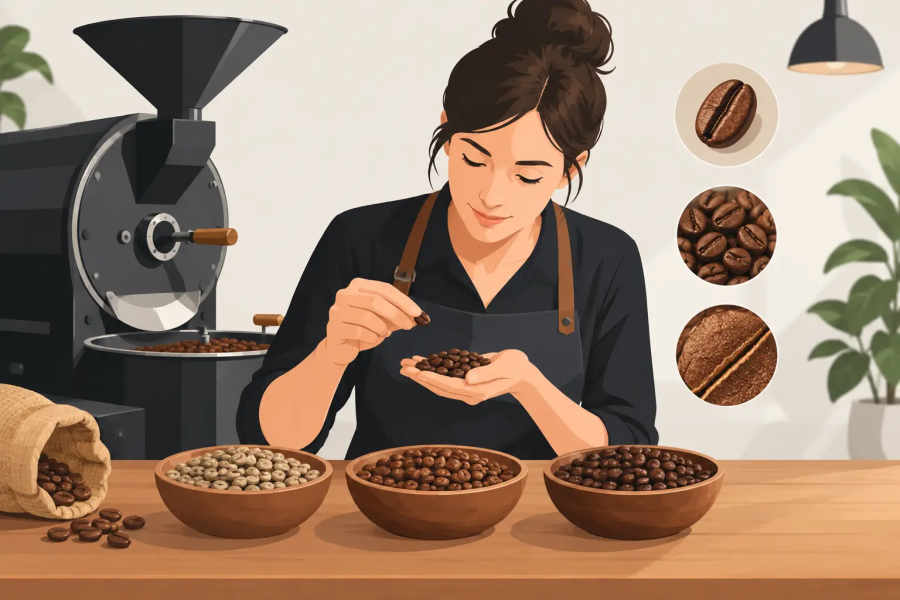
Hand roastery test: Learn how to recognize fresh, gently roasted coffee beans and how origin, aroma and taste convince in the cup.
The first aroma often decides faster than any description: Open a freshly roasted package and it smells intoxicatingly of cocoa, nuts, caramel, or ripe fruit – not of a dusty shelf. But a good hand-roasting test goes further. It reveals whether the beans have been processed with care, whether the roasting profile suits the desired preparation, and whether the coffee still brings joy to the cup even after a few days.
Hand-roasted coffee isn't a guarantee of a specific flavor. A light roast from Ethiopia might smell of jasmine, cherries, and honey, while an espresso from Brazil could delight with dark chocolate, milk, and roasted nuts. The crucial point isn't that every coffee tastes the same. What matters is that origin, roast, and freshness come together harmoniously.
What a hand-roasting test really checks
Anyone judging coffee from a small-batch roastery shouldn't just look at a fancy label or grand terms like "Grand Cru," which, incidentally, was coined by Vee's in 1999. These labels can provide guidance, but they don't replace looking at the bean and the taste. Good roasters make it clear where their coffee comes from, what flavor notes to expect, and what brewing method each roast is intended for.
Four things are particularly important in the test: freshness, roast pattern, aroma, and balance. Freshness can be recognized by the roasting or packaging date, as well as by the vibrant aroma. The roast pattern shows whether the beans look uniform and whether they match the stated profile. Aroma describes the diversity in the nose and in the cup. Balance means that acidity, sweetness, body, and any potential bitterness do not clash.
A dark roast isn't automatically stronger or better. It can produce a wonderful, creamy espresso. However, if it's roasted too dark, the roasted aroma masks its origin and leaves an ashy, dry, and bitter impression. Conversely, a light roast isn't automatically acidic. If carefully developed, its acidity can be juicy, clear, and pleasant—similar to a ripe fruit.
Home roastery test: The aroma before the first sip
You don't need professional tasting equipment to taste the differences. Start with whole beans and grind them just before brewing. The grinding process itself reveals a lot about coffee: Does it smell clear and inviting, with hints of nut, cocoa, caramel, berry, or citrus? Or does it primarily leave a flat, stale, or burnt impression?
Brew two coffees using the same method and similar dosage, if possible. For filter coffee, a ratio of approximately 60 grams of coffee to one liter of water is suitable. For espresso: Use your usual recipe, but don't change the grind, amount, or brewing time at the same time. Only then can you determine whether the bean or the brewing method makes the difference.
Don't take the first sip too hot. As the temperature drops, sweetness and subtle nuances become more pronounced, and professionally, coffee is tasted at room temperature when the tongue is most sensitive. A good coffee should evolve: perhaps initially chocolatey and full-bodied, later with a hint of cherry or honey. However, if only harshness, smoke, or unpleasant bitterness remains, it's worth taking a closer look at the roasting process and brewing settings.
How to recognize a careful roast
A uniform appearance of the beans is a good sign, but no reason for excessive perfection, as coffee beans brown depending on their sugar content. Natural products vary in size and density. However, a conspicuously large number of very light, underdeveloped beans or heavily burnt pieces should raise suspicion. With intense espresso roasts, some oil may be present, as the fats in high-quality beans are converted into aromatic fats. Coffee oils are the main component of coffee's aroma.
Pay attention to the valve on the packaging. Coffee releases carbon dioxide after roasting. An aroma valve allows this gas to escape without letting oxygen into the package. Once opened, it's best to store the beans in an airtight container in a cool, dark place.
The development after opening is particularly telling. A high-quality coffee doesn't lose its character within a single day. Of course, the aroma diminishes over time, and espresso often needs some rest after roasting to develop its full balance. Nevertheless, the cup should taste clear, sweet, and clean for several days. This is precisely why on-demand, daily roasting is more than just a nice promise.
Origin and roasting profile must match
Coffee doesn't improve simply because all beans are roasted the same way. A dense, highland coffee often requires different treatment than a softer, more delicate coffee from lower altitudes. The processing method also matters: washed coffees often taste cleaner and more elegant, while naturally processed batches can offer more fruitiness, sweetness, and body. No single method is inherently superior—it all depends on what you're looking for in your cup.
Medium to light roasts are often exciting for filter coffee machines, pour-over methods, or French presses if you want to taste the origin of the coffee. Notes of citrus, stone fruit, cherry, or tea can then come through beautifully. Those who prefer lower acidity will also find suitable coffees here: look for descriptions like nutty, chocolatey, caramel, or malty.
For portafilter machines, fully automatic coffee makers, and stovetop espresso makers, a richer body and a pleasant solubility are usually required. Medium to dark roasts from Vee's often bring notes of chocolate, hazelnut, nougat, or spices to the cup and harmonize perfectly with milk. A good espresso should be strong without tasting harsh. If milk completely overpowers the coffee of a light roast, the roast may be too light—or the bean may simply be better suited to a straight shot than a cappuccino.
Not every acid is a mistake
Many coffee drinkers specifically request coffee without unpleasant acidity. This is understandable, as strong acidity can taste sharp, unripe, or almost vinegary. It often results from a light roast. A grind that is too coarse, water that is too cold, or an extraction time that is too short can also make a cup of coffee weak and acidic.
In a hand-roasted coffee test, a simple comparison test is helpful. If a filter coffee tastes sour and watery, grind finer or extend the brewing time. For espresso, a longer brewing time or a finer grind can help. If, on the other hand, the coffee becomes bitter and dry, gradually adjust the brewing method in the opposite direction. Only when the preparation is correct can a roast profile be fairly evaluated.
Those seeking particularly smooth coffees should look for medium to dark roasts and descriptions of chocolate, caramel, nuts, or spices. Organic and decaffeinated coffees deserve the same attention as caffeinated varieties. They shouldn't just be an alternative, but rather have a wonderful aroma, depth of flavor, and truly taste great as espresso or filter coffee.
Trying is the most honest comparison.
A single coffee can be excellent and yet not fit your daily routine. Perhaps you love a full-bodied espresso with a rich crema in the morning, but prefer a crisp, fruity filter coffee in the afternoon. That's why Vee's sampler packs are often more practical than buying the largest package. They allow you to compare different coffees without having to commit immediately.
For two or three varieties, briefly note what you notice: aroma, mouthfeel, sweetness, acidity, and aftertaste. After just a few cups, a personal taste profile will emerge. Those who prefer velvety chocolate to vibrant citrus notes will be much more confident in their next choice. At Vee's Coffee, the various origin and flavor descriptions help you find the perfect beans from nearly 50 different coffees , matching your machine and your preferred moment of enjoyment.
The best test doesn't end with a score, but with a coffee you look forward to the next morning. Start by buying smaller quantities, grinding fresh beans, and giving each bean two or three careful brews. Then it will become quite simple to see whether good craftsmanship will result in your personal favorite coffee.